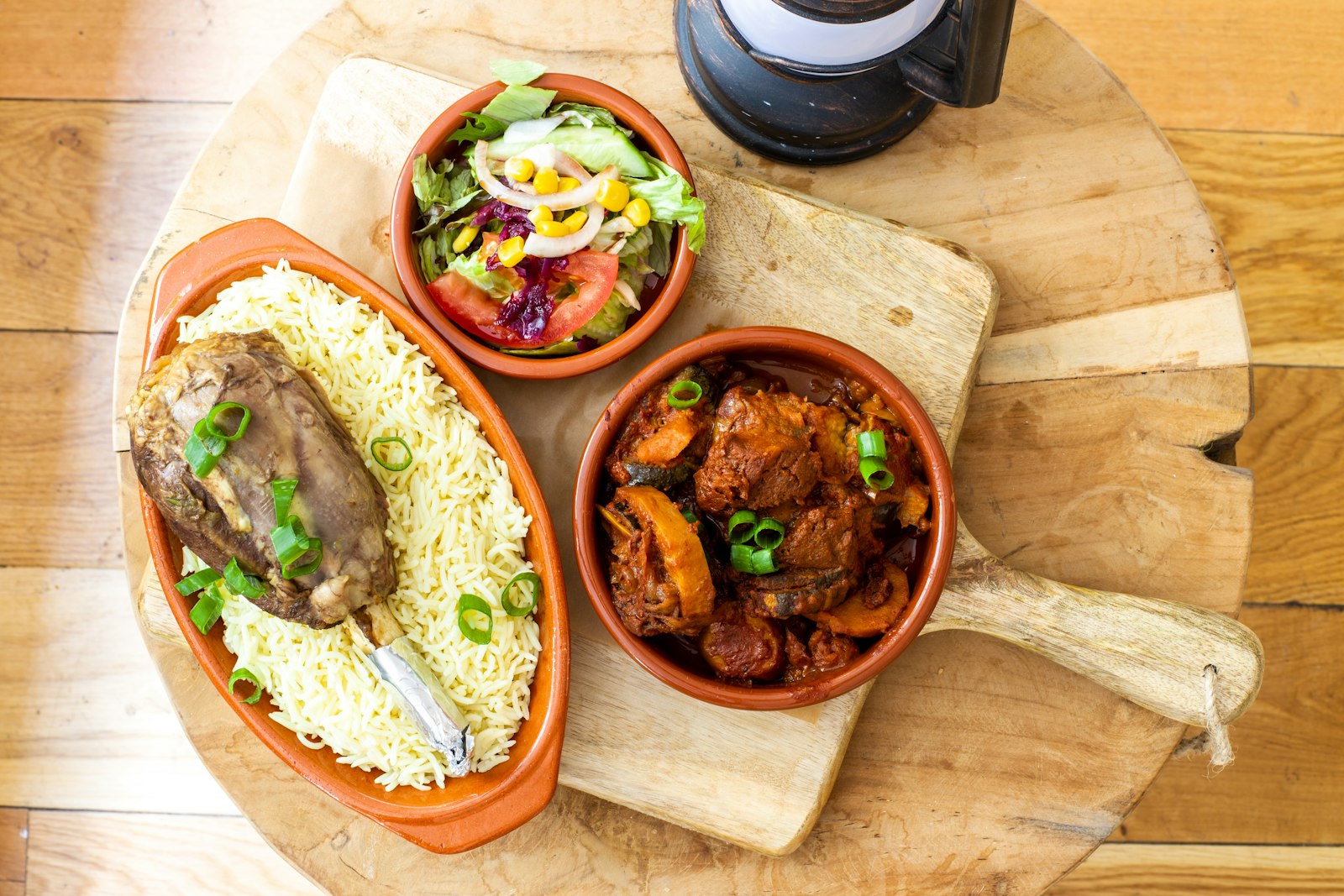
Type "Kenyan food" into Google and you get a mess: a Wikipedia stub, a couple of expat travel posts, and recipe videos that confuse githeri with chapati. For a cuisine that feeds 50 million people and travels with every Kenyan diaspora kitchen from Dubai to Doncaster, that gap is not just embarrassing — it is a market opportunity.
That gap is exactly what Kenyan Food Journal was built to close. Tagline: Serving Stories, One Plate at a Time. Mandate: become the food media brand Kenya actually deserves — recipes, restaurant guides, ingredient deep-dives, cultural history — all written by people who grew up eating the food.
This post is a behind-the-scenes look at how that brand is being built in 2026, what the editorial engine looks like, and what other Kenyan publishers can learn from it. We'll also be honest about the role our team at Equinode plays in keeping the publishing pipeline running.
Why Kenya Needs Its Own Food Media
Walk into any bookshop in Nairobi and the cookbook shelf is dominated by Jamie Oliver, Yotam Ottolenghi, and Tasty knockoffs. Open Pinterest and search "African food" and the algorithm serves you Nigerian jollof and Ethiopian injera before it gets anywhere near a Kenyan dish.
This is not a slight on those cuisines — it is a market failure. Kenya has:
- A street food culture that runs from coastal mahamri to Kisumu's omena to Nairobi's mutura, with regional variations that change every 200 km
- A coastal Swahili tradition shaped by 1,000 years of Arab, Indian, and Portuguese trade
- A modern restaurant scene in Westlands, Karen, and Kilimani that fuses heritage cooking with global plating
- A growing diaspora that wants to cook ugali with the same precision their grandmothers used
And until recently, almost none of that was being documented at the depth a national cuisine deserves. The food existed; the media around the food did not.
This is the same gap that drives most of the Kenyan internet economy in 2026. Local newspapers cover politics, sports, and crime. Lifestyle content gets outsourced to international agencies that do not know the difference between sukuma wiki and spinach. A Kenyan food blog written by Kenyans, indexed properly, and updated weekly is the kind of asset that compounds — every recipe ranks for years, every restaurant guide pulls in tourists, every ingredient explainer becomes a Google snippet. If this sounds like a market gap your business could occupy, our team can help map it out — we offer a free strategy session for founders building Kenyan or pan-African brands.
Kenyan Food Journal in 2026 — The Brand at a Glance
Today, KFJ publishes across eight live categories, with a content library spanning recipes, regional cuisine, ingredient education, and culinary travel.
The Eight Pillars
| Category | What It Covers | Library Size | |---|---|---| | KFJ Recipes | Step-by-step Kenyan and Swahili recipes — bhajia, pilau, mahindi choma, ugali variations | 19 posts | | Ingredients & Cooking Techniques | Single-ingredient deep dives — cardamom, coconut, maize, sweet potato | 13 posts | | Drinks & Beverages | Chai, madafu, sugarcane juice, modern coffee | 9 posts | | Travel & Culinary Experiences | Region-by-region food guides — Naivasha, Karen, coastal towns | 8 posts | | Food News | Restaurant openings, food festival coverage, industry stories | 7 posts | | Hot Spot | Curated restaurant guides for Nairobi and other cities | 6 posts | | KFJ Select | Editor's picks — products, tools, suppliers worth knowing | 5 posts | | Festive & Seasonal Foods | Ramadan, Christmas, Diwali, harvest-season cooking | 4 posts |
The Voice
KFJ does not write like a recipe app. It writes like a magazine. A typical post on Iliki: Cardamom's Role in Kenyan Chai and Pilau will cover botany, trade history (Zanzibar to Mombasa), how to crush vs. grind, three usage examples, and a recipe — in one piece. A Mahindi Choma post is not just "how to roast maize" — it is the story of why every Kenyan road has a maize seller, what makes the kiosk version taste different from the home version, and the right charcoal heat for the kernels to pop without burning.
This is deliberately positioned between a recipe blog and a food magazine. The voice is warm but never patronising. The recipes are precise. The history is researched, not generic. That positioning is what makes the content rank, get saved, and get shared.
The Cadence
KFJ publishes around 10 posts per month — close to three a week — with authorship rotated across a small editorial team (currently Cecilia, Prashant, Yilmaz, and Chef Sahil). That cadence is not arbitrary. It is the minimum frequency needed to keep an emerging publication in Google's "fresh content" eligibility window for evergreen food queries, while staying low enough that editorial quality does not slip.
Need help building a media brand in Kenya — recipes, lifestyle, or otherwise? Our team at Equinode has built and runs content engines for publishers, e-commerce sites, and service businesses across Kenya, Dubai, and India. Book a free strategy call or explore our content services.
The Content Engine Behind the Brand
A blog that publishes 10 times a month with research-led posts is not running on vibes. There is a system. Here is what it looks like, end to end.
Stage 1 — Topic Pipeline
Topics come from four sources, in rotation:
- Search demand — keyword research that prioritises queries with real Kenyan volume (e.g., "kenyan bhajia recipe", "naivasha food guide") over US-skewed global terms ("authentic african recipes")
- Seasonal calendar — Ramadan iftar dishes in March, ndizi harvest content in June, Christmas pilau in December, World Food Day mentions
- Editorial instinct — what the team is actually cooking, eating, or seeing on the streets
- Reader requests — comments and social messages asking for specific recipes
The pipeline is maintained in a single sheet with status columns — idea → researched → drafted → SEO checked → in queue → published. At any moment, there are usually 20–30 topics in the pipeline. This is the same pipeline structure our SEO team builds for content-heavy clients across three continents.
Stage 2 — Research and Draft
A KFJ recipe post is not written from a Google search. The writer either cooks the dish, interviews someone who does, or both. For ingredient explainers, sources include:
- Kenyan academic papers on indigenous food systems (University of Nairobi, Egerton)
- Maktaba (the National Library) for older Swahili food references
- Coastal elders and restaurant chefs for first-hand cultural context
- International food science sources (Harvard, Serious Eats) for technique fundamentals
This is the difference between content that gets cited and content that gets ignored. Google's helpful content system is explicitly tuned to reward "first-hand expertise and a depth of knowledge" — exactly what a Kenyan-written, Kenyan-researched food blog brings.
Stage 3 — SEO Layer
Every draft passes through an SEO checklist before publishing:
- Primary keyword in title, H1, first paragraph, meta description, URL slug
- 2–4 supporting H2 sections mapped to the queries that cluster around the primary
- Internal linking to related KFJ posts (recipes link to ingredient pages, restaurant guides link to recipes that feature local dishes)
- External linking to authority sources (gov.ke domains for food regulation, university domains for nutrition, established restaurants for citations)
- Image alt text describing the dish, not "IMG_2391.jpg"
- Schema markup — Recipe schema on recipe posts (cook time, ingredients, instructions), Article schema everywhere else
- Mobile speed check — Kenyan readers are 92% on mobile; if Largest Contentful Paint is over 2.5 seconds on a Safaricom 4G connection, the post does not ship
This is what built for Kenyan readers actually means in practice. It is also the same playbook our SEO services run for Kenyan clients across very different industries — from Zenith Steel in B2B manufacturing to TotoComfy in baby products. The vertical changes; the discipline does not.
Stage 4 — Publish, Distribute, Measure
Each post goes live on a fixed schedule and gets distributed across:
- Email newsletter — readers who have asked to be told when there is a new recipe
- Pinterest — recipes especially, which act as a long-tail traffic engine for years after publishing
- Instagram — short-form reels and carousels that link back to the long-form post
- Google Search Console — the most important channel, monitored weekly for which queries are starting to rank in positions 4–20 (the easiest to push to position 1–3 with small on-page tweaks)
The measurement loop is what makes the engine self-improving. A post that lands in position 14 for "kenyan pilau recipe" three weeks after publication is not a failure — it is a signal to revisit, add an FAQ section answering the related "people also ask" queries, and re-publish. Most of KFJ's biggest organic posts today were rewritten at least once after publish.
SEO Architecture for a Kenyan Food Blog
Most food blogs that fail in Kenya fail because they treat SEO as an afterthought. KFJ treats it as architecture — decisions made before a single recipe is written. Here is the structural part of the playbook.
URL Structure
Recipes live at /recipes/<slug>. Region guides at /hotspot/<city>-<area>. Ingredient deep-dives at /food-culture/<ingredient>. This is not just tidy — it is a category signal to Google that allows site-wide topical authority to compound. A user (and a crawler) can predict what is at the other end of a URL before clicking.
Internal Linking Hubs
The eight category pages act as topical hubs. Every recipe links up to the relevant ingredient page; every ingredient page links down to recipes that use it; every region guide links across to recipes from that region. Done at scale, this turns a 70-post blog into something that behaves topically like a 700-post blog because Google sees the depth of internal linking and infers expertise.
Schema and Structured Data
Recipe schema is non-negotiable on every recipe post — it is what makes a KFJ post show up in Google with the gold star, cook time, and review count visible directly in search results. Article schema on history and ingredient posts. FAQPage schema on any post with a Q&A section. BreadcrumbList everywhere. Schema is the difference between being on page one and being on page one with twice the click-through rate.
Image Strategy
Food media lives and dies by photography. KFJ's image strategy is:
- One hero image per post — natural light, overhead or 45-degree angle
- 2–4 in-content images — process shots for recipes, ingredient close-ups for explainers
- All images compressed to under 200KB and served as WebP where supported
- Alt text written for screen readers first, SEO second — "a plate of Kenyan bhajia with green chutney" not "bhajia recipe kenya food blog"
This is the same approach our team's web design service brings to every Kenyan publisher and e-commerce client — mobile-first, image-optimised, structured for both humans and search engines.
What Equinode Does Day-to-Day for KFJ
We are not the editorial voice — KFJ's writers own that. What our team handles is the publishing infrastructure:
- Topic research and keyword mapping — finding the queries Kenyan readers actually search for, not the global SEO-tool defaults
- SEO audit on every draft — running the pre-publish checklist before posts go live
- Schema and structured data — implementing Recipe, Article, FAQ, and Breadcrumb markup
- Image sourcing and optimisation — when in-house photography is not available, sourcing licensed editorial imagery and compressing for performance
- Internal linking maintenance — keeping the hub-and-spoke topical structure intact as the library grows
- Performance monitoring — weekly Search Console review, identifying posts close to the top of page 1 and tweaking them to push higher
- Build and deploy pipeline — the technical plumbing that gets a draft from Google Docs to a live, indexed, schema-validated post
This split — editorial team owns the voice, our team owns the infrastructure — is the model that works for almost every Kenyan publisher we have seen succeed.
Lessons for Other Kenyan Publishers
If you are building a food blog, lifestyle media brand, or any other content-led business in Kenya in 2026, here is what KFJ's first 12–18 months teach you.
1. Niche down before you broaden out. KFJ did not start with African food. It started with Kenyan food, told by Kenyans. That specificity is what made the first 30 posts rank against established global sites — depth in a narrow lane always beats breadth across a wide one.
2. Publish on a cadence you can sustain for 24 months, not 24 weeks. 10 posts a month for two years beats 40 posts a month for three months and then nothing. Google's trust signals are about consistency over time, not bursts.
3. Invest in a real keyword foundation. This is the single biggest difference between food blogs that grow and food blogs that languish in obscurity. Knowing that "naivasha food guide" gets 110 searches a month in Kenya while "kenyan food guide" gets 30 changes what you write, in what order.
4. Photography is not optional, but it does not need to be expensive. A phone with good natural light beats a poorly lit DSLR shot every time. Build a shooting routine into your cooking — the photo is part of the post, not an afterthought.
5. Schema, internal linking, and site speed are not "technical SEO" — they are basic publishing hygiene. Treat them like spell-check. Always on, every post.
6. Find a partner for the infrastructure so you can focus on the voice. Editorial teams that try to also manage SEO, schema, image compression, Pinterest scheduling, and Search Console end up doing none of it well. Outsource the plumbing — that is exactly what our team helps publishers and brands with.
Why Partner With Equinode
We work with food publishers, e-commerce founders, B2B service firms, hospitality brands, and consumer apps across Kenya, the UAE, and India — and the common thread is that none of them want their team firefighting SEO tickets at 11 PM on a Tuesday.
What we bring:
- A content engine, not just one-off SEO work. Topic pipeline, keyword strategy, SEO audits, schema, internal linking, performance monitoring — running continuously
- Kenyan market knowledge. We work with Real Management, 9 Park Square, Zenith Steel, Acai Oasis, TotoComfy, and UltraRed Outdoors across very different industries — the depth of local context shows up in the strategy
- Cross-border perspective. Our work in Dubai and India means we can spot patterns from other emerging markets that apply to Kenya before they become obvious
- A no-cookie-cutter promise. Every client gets a plan that maps to their margin structure, audience behaviour, and team capacity — not a template
If you are launching a publication, growing a Kenyan brand, or just tired of agencies that talk in vague metrics, talk to our strategists — we will give you a real read on what your search position and content engine could look like in 12 months.
Frequently Asked Questions
How do I start a Kenyan food blog in 2026?
Start with three things: a content niche specific enough that you can own it (e.g., Swahili coastal cuisine not African food), a publishing cadence you can sustain for at least 24 months, and a basic SEO foundation — keyword-mapped topics, Recipe schema on recipe posts, mobile-first speed. Skip the "build a fancy website first" instinct; a simple, fast site with great content outperforms a beautiful site with weak content. And get a partner for the infrastructure side early — that's exactly what our team helps Kenyan founders with.
What does a Kenyan food blog need to rank on Google?
Search-mapped content (topics chosen because Kenyan readers actually search for them, not because they sound good), Recipe and Article schema markup, internal linking across category hubs, mobile site speed under 2.5 seconds LCP, and consistent publishing. The mistake most food blogs make is writing great recipes with weak technical SEO — Google does not reward effort it cannot read.
How much does it cost to run a content-led brand in Kenya?
Depends on cadence and ambition. A solo founder publishing twice a month with self-shot photography can run on under KES 40,000/month (hosting, tools, occasional design help). A KFJ-scale operation publishing 10 posts a month with editorial team, SEO infrastructure, and image sourcing is in the KES 150,000–350,000/month range. For a deeper breakdown by category, see our Kenyan digital marketing cost guide.
Why does Kenyan food media need Kenyan writers?
Because the cuisine has technical, cultural, and regional nuance that does not survive translation. A non-Kenyan writer covering ugali will get the cornmeal-to-water ratio approximately right; a Kenyan writer will tell you why Western Kenya prefers it stiffer than Central, what kuni to use on a jiko, and which side dishes go with which texture. That depth is the difference between content readers bookmark and content they skim once.
How does Equinode help with content publishing in Kenya?
We handle the infrastructure side end-to-end — topic and keyword research, draft-stage SEO audit, Recipe and Article schema, image optimisation, internal linking maintenance, weekly Search Console monitoring, and the build/deploy pipeline. The client team owns the voice and the editorial calls; we own the plumbing. The result is a publication that grows in organic traffic without the editorial team being constantly pulled into technical SEO work.
Can a Kenyan food blog actually be a business?
Yes — but it is a 24-month patience game, not a 6-month sprint. The revenue lines that work for established Kenyan food media are sponsored content (with full disclosure), affiliate partnerships with cookware and ingredient suppliers, recipe e-books, brand consulting for F&B clients, and occasionally cookbook publishing. Display ad revenue alone almost never works at Kenyan traffic levels. Build the audience first; monetise from a position of editorial trust.
Ready to Build a Brand That Compounds?
At Equinode, we don't do cookie-cutter. Whether you're launching a publication in Kenya, scaling a brand in Dubai, or expanding into India — our team builds content engines, SEO infrastructure, and digital strategy that move the needle.
We've helped clients across food media, baby products, jewellery, real estate, healthcare, B2B compliance, and 4x4 accessories — and the common thread is that we treat every market on its own terms.
Email Us | WhatsApp Us | Call: +971 50 828 7969
We respond within 24 hours.