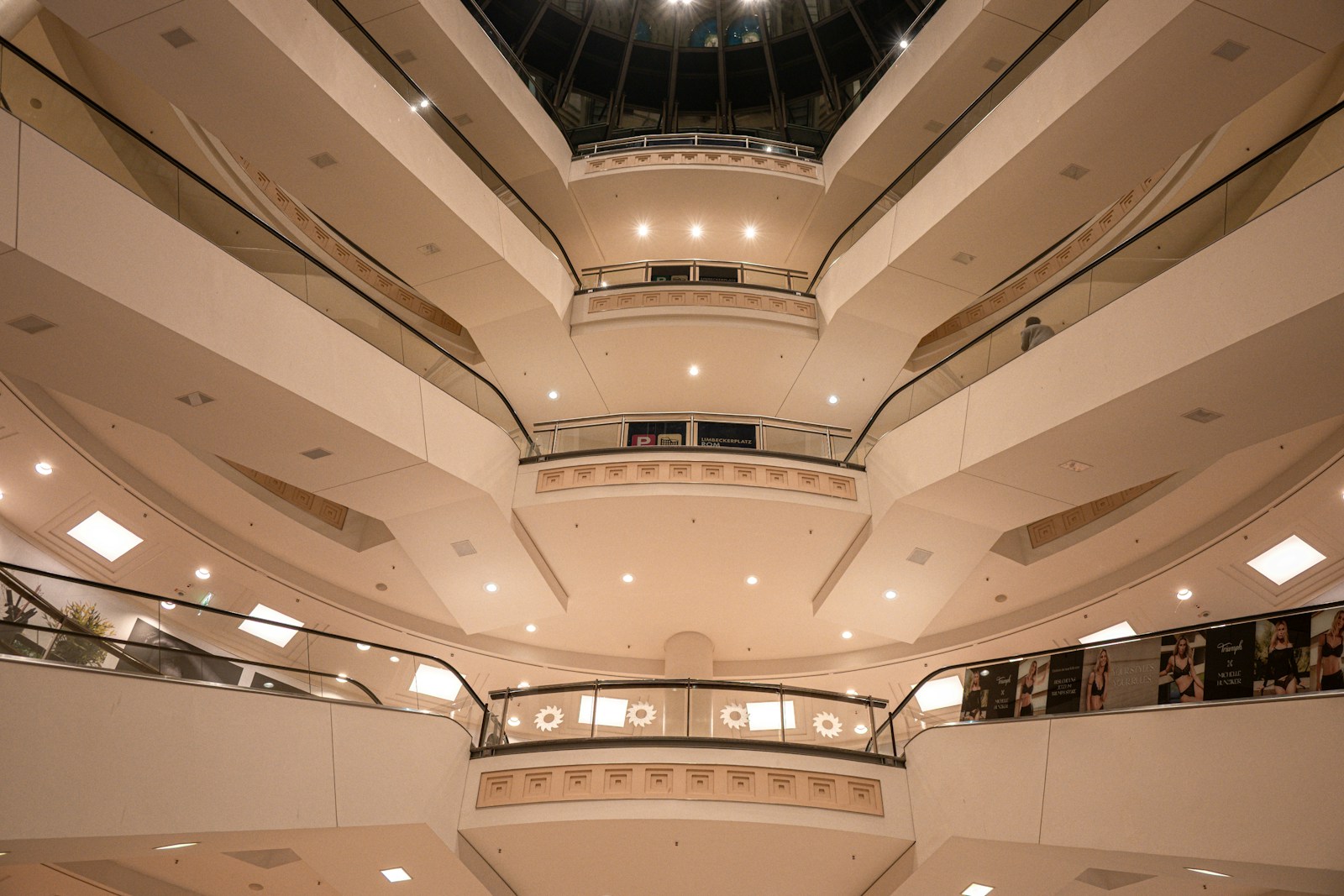
Retail marketing in Nairobi has changed more in the last three years than in the previous fifteen. The shopper who used to drive to a mall for the weekend now makes that decision on a phone, mid-scroll, after watching a 12-second reel. The mall that wins their afternoon is the one that showed up on Instagram the night before, ranked in Google Maps that morning, and answered a WhatsApp message in under five minutes.
This post is about how that actually works in practice - using 9 Park Square, a modern mall in Westlands, as the case study. It is also about what Equinode does day-to-day to keep retail destinations visible, talked about, and full.
If you run a retail brand, manage a mall, or operate a multi-tenant property in Nairobi, this is the playbook.
Nairobi's retail landscape in 2026
Kenya's retail story in 2026 is not "online is killing physical." It is "physical and digital have fused, and the malls that don't see that are losing." The Kenya National Bureau of Statistics (KNBS) tracks formal retail growth alongside e-commerce, and the gap between them is closing - but for the right kind of mall, footfall is up, not down.
What changed:
- Mobile-first discovery. Over 90% of urban Kenyans research where to go on a phone before they leave the house. If a mall is invisible on Instagram, TikTok, and Google Maps, it does not exist for that decision.
- M-Pesa as a retail layer. Tenants increasingly accept M-Pesa Till numbers, Lipa Na M-Pesa, and Pochi La Biashara. Shoppers expect it. Marketing that ignores M-Pesa-first behaviour misses the conversion moment.
- Westlands density. The Westlands corridor - Parklands Road, Waiyaki Way, Mpaka Road - has more retail per square kilometre than any other part of Nairobi. That is competitive pressure and opportunity at the same time.
- Experience over transaction. Shoppers come to malls for cafes, dessert spots, salons, fitness studios, kids' play, and a Saturday afternoon. The malls that program experiences win the dwell time. Pure-transaction malls are losing.
A retail destination in Nairobi today is not just a building with shops. It is a brand competing for attention with cafes in Kilimani, food trucks in Karen, and an endless feed of options on a 6.5-inch screen.
Why retail marketing in Nairobi is different
Most retail marketing playbooks are written for North American suburbs or European high streets. Almost none of that survives contact with Nairobi reality. A few things that matter here that don't matter elsewhere:
1. Geo-targeting has to be hyper-local. A Westlands mall does not market to "Nairobi." It markets to people within 4-7 km - Westlands, Parklands, Spring Valley, Lavington, Kilimani, Highridge, parts of Riverside. A radius wider than that wastes spend on shoppers who have a closer option.
2. Boda boda and Uber realities shape catchment. The mall's catchment is not measured in kilometres. It is measured in minutes by boda, Bolt, or Uber. A 10-minute boda from Parklands is a different shopper than a 10-minute drive from Kileleshwa. Marketing language and offers should reflect that.
3. Saturdays and Sundays do most of the lifting. A Westlands mall makes a disproportionate share of its weekly footfall on Friday evening through Sunday afternoon. Marketing that pushes Tuesday content as hard as Saturday content is misallocating budget.
4. Reviews and social proof punch harder than ads. Kenyan shoppers trust friends and Google reviews more than paid creative. A 4.6-star Google Business Profile with 800 recent reviews outperforms a polished ad campaign almost every time.
If this sounds like the territory your business operates in, our team can help - we offer a free strategy session for retail and multi-tenant brands across Kenya.
9 Park Square: a Westlands mall, a modern destination
9 Park Square sits on Parklands Road in the Westlands area of Nairobi - one of the densest, most competitive retail corridors in East Africa. It is a modern, multi-level retail and lifestyle destination with a tenant mix that mirrors how shoppers actually live: a supermarket anchor, a layered cafe and dining floor, fashion and beauty, services, kids' spaces, and an event-friendly atrium.
What makes 9 Park Square interesting from a marketing perspective is not the building. Plenty of malls have nice buildings. It is the positioning. 9 Park Square treats itself as a neighbourhood destination - somewhere you spend two to four hours, not somewhere you run a single errand. That positioning shapes every social post, every event, and every campaign.
A few things 9 Park Square does well that most malls in Nairobi don't:
- Tenant cross-promotion. A new bakery launch is not just a tenant story - it is a mall story. The mall's social channels tell the bakery's story, the bakery cross-tags the mall, and the mall's Google Business Profile reflects the new offering.
- Event programming as content. Kids' weekends, food festivals, brand activations, pop-ups - each becomes a content engine. The event runs once. The content runs for two weeks.
- Visual consistency. A mall's Instagram grid is its second front door. 9 Park Square's grid is colour-balanced, photo-led, and recognizably the same brand across reels, stories, and posts.
That is the brand. The next sections are the channel mix that makes it work.
Need help building a retail or local marketing strategy that actually drives footfall? Our team at Equinode runs social media, search, and content for brands across Kenya, Dubai, and India - including 9 Park Square. Book a free strategy call or explore our services.
The 5-channel mix that drives mall footfall
There is no single channel that fills a Nairobi mall on a Saturday. The channels work together, and the order matters. Here is the stack we use - in priority order - for retail destinations in Nairobi.
Channel 1: Instagram and TikTok (the discovery layer)
Instagram and TikTok are where Nairobi shoppers find weekend plans. The content that works is not posed product photography. It is:
- Geo-tagged reels showing real shoppers, real food, real moments inside the mall.
- Tenant features - 30 to 45-second reels that follow a shopper through one tenant's offering.
- Behind-the-scenes - the new cafe being built, the upcoming event, the holiday lights going up.
- User-generated content - reposts of customer reels, story tags, and cross-promotions with food influencers.
For 9 Park Square, the cadence is roughly 4-5 posts per week on Instagram, 2-3 reels per week on TikTok, and stories every day the mall is open. That is the floor, not the ceiling.
Channel 2: Google Business Profile and Maps (the intent layer)
When a shopper types "mall near Westlands" or "places to eat in Parklands" into Google Maps, the result they tap depends almost entirely on a Google Business Profile. The variables that matter:
- Profile completeness. Categories, description, hours, photos, attributes (parking, kids' area, accessibility), and tenant list all feed the ranking algorithm.
- Photo recency. Google rewards profiles with new photos every week. Old photos signal a stale destination.
- Posts. GBP Posts (events, offers, updates) are still underused by Kenyan retail. Used consistently, they lift profile clicks meaningfully.
- Reviews and review responses. Every review answered - especially the negative ones - signals an active, accountable business. We respond to 100% of reviews within 48 hours for our retail clients.
GBP is the single highest-leverage channel for a Westlands mall. A well-run profile drives more direct visits than any paid ad, and that is exactly what our SEO team handles for retail clients across Nairobi.
Channel 3: On-site events (the content engine)
A live event in the mall is a content factory. One Saturday afternoon kids' event produces:
- 8-12 reels worth of footage.
- 30+ photos for the grid.
- 3-4 weeks of social posts.
- A Google Business Profile event post.
- Influencer attendance and their content.
- A WhatsApp blast to the mall's contact list.
The event itself drives footfall on the day. The content drives footfall for the next month. Malls that don't program events are starving their content engines.
Channel 4: Influencer and creator partnerships (the trust layer)
Nairobi has a deep bench of food, lifestyle, and family creators. The right creator, with 30k-150k engaged followers, drives more bookings to a tenant restaurant than a polished ad campaign does. The mechanics:
- Pick creators by audience overlap, not follower count. A 40k-follower Westlands food creator outperforms a 200k-follower national lifestyle creator for a Westlands mall.
- Pay in product + access first, cash second. A food festival creator pass, free meals, and event invites are higher-leverage than direct fees for many micro-creators.
- Brief lightly. Tell the creator the moment, not the script. Their voice is what their audience trusts.
Channel 5: WhatsApp Business and SMS (the conversion layer)
WhatsApp is where intent becomes a visit in Nairobi. A mall that captures shopper numbers - via event sign-ups, raffle entries, loyalty programs - and broadcasts to them weekly converts better than almost anything else. Rules we follow:
- Opt-in only. Never broadcast to a list that didn't sign up. Reputation is everything.
- One broadcast per week, max. Two if there is a major event.
- Lead with value, not promotion. "Brunch lineup this Saturday" beats "20% off."
- Two-way. Answer replies in under five minutes during open hours.
This is the mix. Five channels, one calendar, one brand voice. Now the part most agencies skip - what running this looks like day to day.
How Equinode runs social for 9 Park Square
A retail destination's social presence is a daily operation, not a monthly content drop. Here is what the week actually looks like for the social media team running 9 Park Square's channels:
Monday: Tenant check-in. What is new this week? New menu, new arrival, event, collaboration? The week's content slate gets built around real tenant stories, not invented ones.
Tuesday: Shoot day. A photographer or videographer is on-site capturing fresh content. Reels footage, grid photos, story material, tenant features. One shoot day fuels the week.
Wednesday: Editing, scheduling, GBP posting. The week's content gets cut, captioned, scheduled across Instagram, TikTok, and Facebook. New GBP post goes live.
Thursday-Friday: Daily stories, reel publishing, real-time engagement. Comments answered within two hours during open hours. DMs answered within five minutes.
Saturday-Sunday: Live story coverage of the busiest days. Real-time reels of events, food, families, and atmosphere. This is when the mall's content engine runs hottest.
Behind that calendar:
- A monthly content theme that ties to events and seasonal moments (Easter, Eid, Mother's Day, holiday season).
- A monthly performance review covering reach, profile visits, GBP impressions, story exits, and reel completions.
- Quarterly tenant interviews to surface stories that would otherwise stay hidden.
- A creator roster that gets refreshed every 90 days as audiences shift.
This is exactly what our social media team does for retail destinations - and it is the difference between a mall that posts and a mall that performs.
Measuring foot traffic without owning a foot-traffic counter
The hardest question in retail marketing is: did the campaign actually bring people in? Most malls don't have a turnstile. Most retail brands don't have a real-time footfall sensor. So we measure proxies, and we triangulate.
Direct signals:
- Google Business Profile "directions requested" - the closest thing to "person on their way."
- GBP "calls" and "website clicks" - high-intent signals.
- Tenant-reported anomalies ("we had a record Saturday") - qualitative but real.
Social signals:
- Profile visits (Instagram, TikTok).
- Story tags from the location.
- Mentions of the mall in user-generated content.
- Reel saves (high-intent: someone is planning a visit).
Search signals:
- Branded search volume ("9 Park Square," "park square westlands") month over month.
- Click-through rate from search results.
- Maps impressions.
Event signals:
- RSVP counts and check-ins for programmed events.
- WhatsApp list growth tied to events.
- Tenant footfall on event days vs. non-event days.
No single number tells the story. A working dashboard combines six to ten of these into a weekly view, and the trend over 90 days is what matters - not any individual day.
The 2026 retail playbook for Nairobi malls
If you operate a mall, a multi-tenant property, or a retail brand in Nairobi, here is the playbook in shorthand:
- Own your Google Business Profile like it is your front door. Photos weekly, posts weekly, reviews answered within 48 hours.
- Treat your Instagram grid as your second front door. Visual consistency, geo-tagged reels, tenant features.
- Program events that double as content. One Saturday event = 4 weeks of content.
- Build a WhatsApp list ethically and broadcast weekly. Opt-in, value-led, answered.
- Hire creators by audience overlap, not follower count. Westlands creators for Westlands malls.
- Measure what you can, accept the proxies. Directions requested, branded search, profile visits, story tags.
- Show up on Saturday and Sunday harder than on Tuesday. Spend follows where shoppers actually decide.
- Make M-Pesa visible everywhere. Till numbers, Lipa Na, Pochi - in stories, posts, and on-property signage.
- Cross-promote tenants relentlessly. A bakery's success is the mall's story.
- Audit and refresh quarterly. Channels, creators, content themes, GBP attributes - all of it has a shelf life.
That is the playbook. None of it is theoretical. All of it is what we run for retail clients across Nairobi.
FAQ
1. How much should a mall in Nairobi spend on digital marketing each month?
Most modern Westlands-tier malls spend somewhere between KES 250,000 and KES 800,000 per month across content production, paid social, GBP management, and creator partnerships. The right number depends on tenant count, footfall targets, and how much in-house capacity exists. The wrong number is zero - you cannot run a 2026 mall on word-of-mouth alone.
2. Is paid Instagram advertising worth it for a retail mall?
Yes, but in a specific way. Paid Instagram is most effective when used for event promotion and reel boosts on hyper-targeted geo-radii (4-7 km around the mall) - not for generic "visit us" creative. Boost the reels that are already over-performing organically. That is where the ROI sits.
3. How long until digital marketing actually moves footfall?
Realistically: 60-120 days for the first measurable shift, 6-12 months for a meaningful and durable change. Anyone promising mall-wide footfall gains in 30 days is selling vibes, not strategy - and that is exactly what our team helps mall operators avoid.
4. Should a mall's tenants run their own social, or should the mall do it?
Both. Tenants run their own brand voice and product social. The mall handles destination-level content, events, GBP, and cross-tenant storytelling. The mall's job is to make tenants more visible than they would be alone. Tenants' job is to be excellent inside the mall.
5. Are TikTok and Instagram both necessary, or can a mall pick one?
Both. Instagram drives the older, higher-spend shopper (28-45). TikTok drives the younger, higher-frequency shopper (18-30) and increasingly the family decision-maker for events and dining. The content overlaps - the same reel often runs on both - so the production cost is low and the audience reach is wider.
6. What is the single biggest mistake Nairobi malls make with their marketing?
Treating marketing as monthly campaigns instead of a daily operation. A mall is a daily destination. Its marketing has to operate at the same cadence. Two posts a week and a quarterly campaign will never compete with a competitor running a full daily content engine.
Ready to grow your retail brand in Nairobi?
At Equinode, we don't do cookie-cutter. Whether you operate a mall, a multi-tenant property, or a retail brand in Westlands, Karen, Kilimani, or further out - our team builds the daily marketing operation that drives real, measurable footfall.
We work with brands like 9 Park Square, Zenith Steel, UltraRed Outdoors, and TotoComfy across Kenya, plus retail and B2B clients in Dubai and India.
Email Us | WhatsApp Us | Call: +971 50 828 7969
We respond within 24 hours.
Related reading on Equinode: