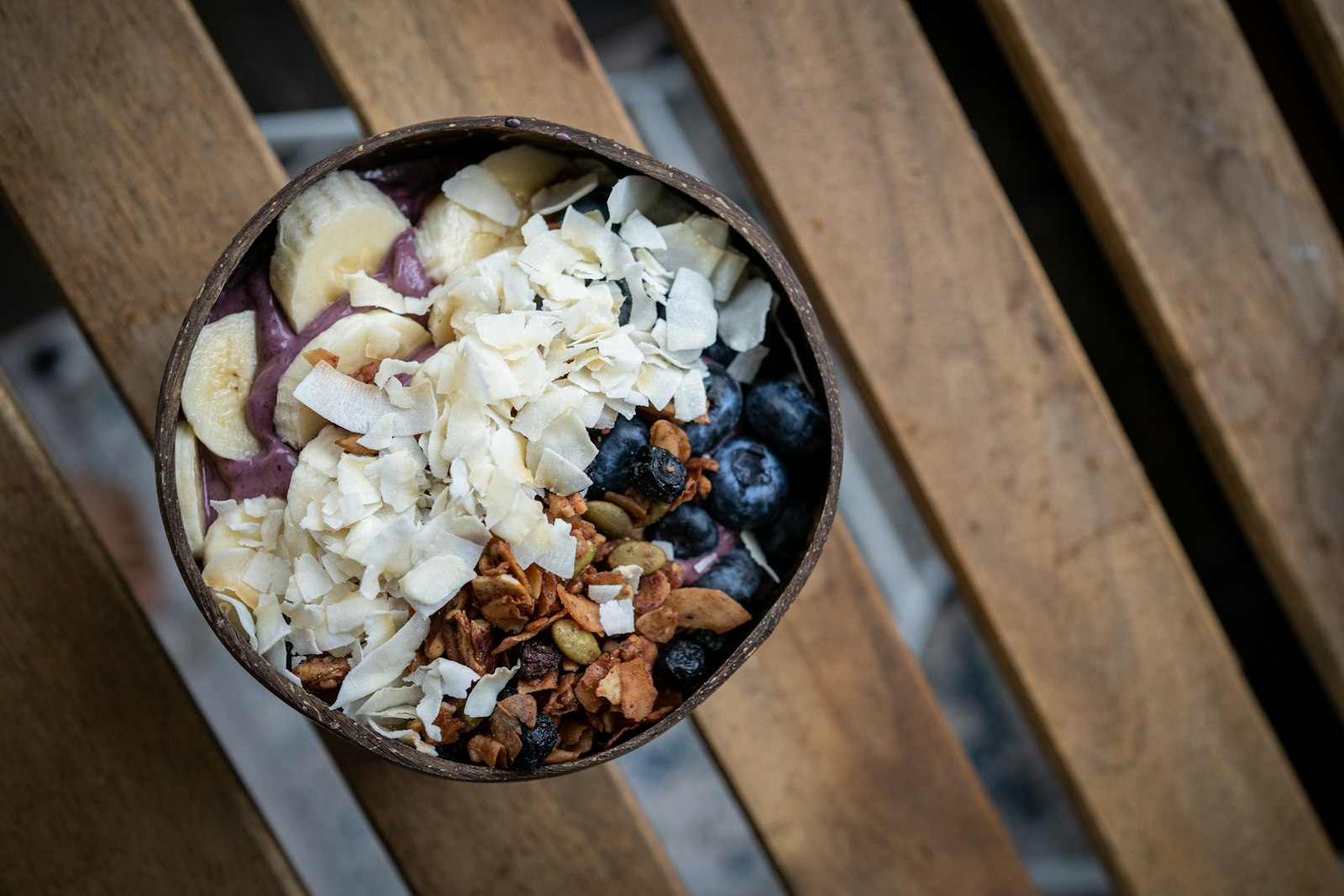
Functional food branding in Kenya looks nothing like the playbook the same category runs in Los Angeles, London, or Sydney. Kenyan shoppers are busy, value-aware, and culturally sceptical of anything that markets itself as "superfood" without proof. They will pay for a bowl of acai. They will not pay for a lecture about antioxidants.
This post is about how to build a wellness food brand that actually works in Nairobi - using Acai Oasis, a single-location cafe inside New Muthaiga Mall, as the case study. It is also a look at what our branding team at Equinode does day-to-day for early-stage F&B founders who want to grow into a category, not just a corner shop.
If you are launching a wellness cafe, smoothie bar, juice brand, salad concept, or any kind of healthy quick-serve in Kenya, this is the playbook.
Why functional food branding in Kenya is different from US/UK templates
The default wellness brand template - clinical white background, sans-serif logo, ingredient lists framed as benefits, language that talks about gut microbiomes - was written for shoppers who already buy the category. That shopper exists in Nairobi, but they are a minority. The Kenyan market for functional food is being built right now, and the brands that win it are the ones that translate, not transplant.
A few things matter here that do not matter in mature markets:
- Trust gap on imported ingredients. Acai is Brazilian. Matcha is Japanese. Spirulina is mostly Indian. A Kenyan customer hearing about these for the first time wants to know they are real, fresh, and worth the price - not just trendy. The nutritional research on these ingredients is genuinely strong - acai is studied as a high-antioxidant fruit by sources like the Harvard T.H. Chan School of Public Health - but research papers are not what convert a Nairobi shopper. Branding has to do that work without sounding defensive.
- Price-to-value scrutiny is sharp. A KES 1,200 bowl is competing with a full lunch from a sit-down restaurant or a chips-and-chicken combo from an aggregator app. With urban consumer spending tracked closely by the Kenya National Bureau of Statistics, the gap is real and gets compared aloud. The brand has to justify it clearly, not implicitly.
- Visual cues from quick-serve coffee chains influence wellness expectations. Java House, Artcaffe, and Connect Coffee have shaped what a "premium casual" food experience looks like in Nairobi. Wellness brands that ignore that visual vocabulary feel either too clinical or too foreign.
- English variant matters. Kenyan English is not American English. "Bowls" lands. "Smoothies" lands. "Crushing it with adaptogens" does not. Voice has to feel local, even when the product is global.
- Mobile-first and M-Pesa-first. Discovery happens on Instagram and Google Maps. Payment happens on M-Pesa. A wellness brand whose website does not surface both clearly is making customers do extra work.
Functional food branding in Kenya is the discipline of taking a global category and giving it Nairobi's voice, price logic, and payment reality. Get those three right and the rest of the brand falls into place.
Meet Acai Oasis: a Muthaiga cafe with a Brazilian product and a Kenyan audience
Acai Oasis sits at the parking entrance of New Muthaiga Mall in Thigiri Ridge - a quiet, residential-led shopping centre that serves Muthaiga, Runda, Gigiri, and the diplomatic corridor north of the city. The product is Brazilian: real acai pulp, served in wooden bowls with toppings sourced fresh daily. Chia puddings, protein smoothies, and a kids' menu round out the offer.
What is interesting about Acai Oasis from a branding perspective is what it is not:
- It is not a chain. There is one location. The brand has to work hard at a single point of contact.
- It is not a "diet" brand. The positioning is closer to "indulgent done right" than "calorie-controlled."
- It is not a juice bar. Bowls are the hero product. Juice is the secondary use case.
- It is not Western-coded. The wooden bowls, the natural-ingredient story, and the warm hospitality feel Kenyan-Brazilian, not California.
For a brand operating from one mall location with a niche product imported from the Amazon, the branding job is precise: build instant credibility for a foreign ingredient, attract the right neighbourhoods, hold a premium price without alienating anyone, and turn first-time customers into a flywheel of word-of-mouth. None of that happens by accident.
Five branding decisions that make or break a Kenyan wellness brand
Across the F&B founders Equinode has worked with - from TotoComfy in baby retail to The Cookie Bar in bakery - the pattern is consistent. Five branding decisions, made early, determine whether a small Kenyan F&B brand grows into a category leader or stays a hidden gem.
1. Naming that signals what you sell, not just how you feel. "Acai Oasis" tells you the product (acai) and the experience (an oasis - a calm, restorative stop). "Wellness Hub" or "Pure Bliss" would not. Kenyan shoppers are searching mobile-first, and a name that contains a product noun is found faster than a name that is purely emotional.
2. A logo and palette that survive a Westlands-Lavington-Karen drive-by. A wellness brand in Nairobi will be seen on a mall sign, an Instagram tile, a wooden bowl, a delivery rider's bag, and a paper sleeve. The identity has to read at all scales. Acai Oasis uses warm, earthy tones with a hand-drawn feel - close enough to "premium casual" to compete with the Java Houses of the world, far enough from "clinical wellness" to feel inviting.
3. Pricing language that is honest without being apologetic. "From KES 950" works. "Premium pricing" does not. The brand needs to communicate value through ingredient sourcing, portion size, and craft - not hide behind jargon.
4. A visual story for the product that is genuinely shareable. A wellness food brand in 2026 lives or dies on whether customers post the bowl. That is a deliberate design problem - bowl shape, garnish layout, lighting in the cafe, even the wood grain - not a happy accident. Acai Oasis's wooden bowls and fruit-arc presentation are an Instagram decision dressed as a product decision.
5. A founder-or-place story that travels. For a single-location brand, the place becomes part of the founder story. Muthaiga, Thigiri Ridge, and the residential calm of the area are all part of why Acai Oasis feels different from a busy CBD cafe. A brand that hides its location is leaving identity on the table.
If this sounds like the territory your business operates in, our team can help - we offer a free strategy session for founders building wellness, food, or hospitality brands in Kenya, the UAE, or India.
Building a wellness food brand in Kenya? Our team at Equinode has helped 25+ businesses across Kenya, Dubai, and India get the brand foundations right - naming, identity, web, and content. Book a free strategy call or explore our branding services.
How Equinode built Acai Oasis's brand foundations
A new brand needs three things on day one: a verbal identity (name, tagline, tone), a visual identity (logo, palette, type, photography), and a digital presence (website, Instagram, Google Business Profile) that can carry both consistently. None of that is optional, and getting it wrong is expensive to rework later.
For Acai Oasis, the branding work at Equinode looked like this:
- Verbal identity. Tagline and voice that emphasise freshness, naturalness, and indulgence in roughly equal measure. The brand promise is "healthy food should be exciting, colorful, and genuinely delicious" - which is an entire positioning statement compressed into one line.
- Visual identity. A logo that reads as both wellness and warmth. A palette of berry purples, fresh greens, and natural wood tones. Imagery that prioritises real bowls in real light over stock-perfect compositions.
- Web presence. A site that puts the menu, the sourcing story, and the location front and centre. No hidden hours. No buried address. M-Pesa and cash payment options stated clearly because those are the actual payment methods in use.
- Google presence. A Google Business Profile that ranks for "acai bowls Nairobi," "healthy cafe Muthaiga," and a small set of niche queries. Reviews collected actively. Photos refreshed regularly. The kind of local SEO discipline that compounds over a year.
- Photography direction. A consistent shooting style - natural light, top-down hero shots, ingredient details, lifestyle moments - that makes the brand instantly recognisable across Instagram, the website, and any printed menu.
The point is not that any one of these is exotic. The point is that they are done together, in one direction, with one brand voice. That coherence is what most early-stage Kenyan F&B brands miss, and it is exactly what our branding team is built to deliver.
The content engine: how a single-location cafe shows up daily online
A single-location cafe cannot afford a content team. It also cannot afford to be invisible. The middle path is a content engine - a small set of formats, repeatable, low-effort, that keep the brand visible without burning the founder out.
For a wellness brand in Nairobi, the engine usually looks like this:
- Two-to-three Instagram posts a week. One product hero (the bowl, beautifully). One ingredient or sourcing story (the acai journey, the chia, the Brazilian connection). One community moment (a happy customer, a kid's birthday, a runner's post-workout stop).
- Daily stories. Behind-the-counter, fresh-prep mornings, customer reactions, weather-and-vibe content. Stories build familiarity in a way the feed cannot.
- Weekly TikTok or Reels. Short, faster, less polished. Recipe demos, prep-ASMR, taste-tests with mall shoppers. This is where new audiences come from in 2026, especially the under-30 wellness crowd.
- Monthly Google Business Profile post. New menu items, seasonal changes, hours updates. Not glamorous, but it directly affects local search visibility - the same engine that powers our social media marketing work in Kenya.
- Quarterly review-and-refresh. Audit what worked, what flopped, refresh photography, kill formats that are not pulling weight.
The discipline that matters here is not creativity - it is consistency. A small Kenyan F&B brand that posts twice a week for 52 weeks beats a brand that posts ten times in one launch month and then goes quiet.
Where most Kenyan wellness brands lose the plot
After working with founders across food, baby retail, jewellery, and hospitality in Kenya, the failure modes for new wellness brands are predictable:
Failure 1: Trying to look like a US brand. A clinical, ingredient-led visual identity that feels imported. It does not lower the trust gap on a foreign ingredient. It widens it.
Failure 2: Hiding the price. "Inquire for pricing" or no menu online at all. This is a self-inflicted wound. A Nairobi shopper deciding between three options will pick the one whose menu they can see.
Failure 3: Treating the website as a brochure. A static site that lists the menu and stops there. No GBP integration, no booking, no order link, no story. The site has to do at least three jobs: inform, convert, and earn search visibility - which is exactly the standard a modern Kenyan website needs to hit.
Failure 4: Outsourcing content with no brand brief. Hiring a freelance social manager without a written voice and visual guide. Three weeks in, the feed looks like five different brands.
Failure 5: Ignoring the founder. In an early-stage brand, the founder is the most powerful piece of content. Hiding them behind the brand is leaving free reach on the table. A few founder-led posts a month build trust faster than any campaign.
Every one of these is fixable. Most of them are fixed by writing things down: the brand book, the content calendar, the photography brief, the price logic. That is unglamorous work, and it is what separates a hobby brand from a category brand.
A five-step playbook for any Kenyan F&B founder
If you are building a wellness food brand, a quick-serve concept, or any new Kenyan F&B identity, here is the playbook in order. None of these are skippable, and the order matters.
Step 1: Lock in the verbal identity. Name, tagline, three-line "we are / we are not" voice statement, banned words list. One day of focused work. Document it.
Step 2: Build the visual identity. Logo, palette, two fonts, photography style. Test on a phone screen, a printed menu, a mall sign, and an Instagram tile before locking. Two weeks if done well.
Step 3: Stand up a single, sharp digital home. A small Next.js or WordPress site with menu, hours, location, sourcing story, M-Pesa-friendly ordering, and a review module. Mobile-first, fast, indexable. Core Web Vitals matter - the standards published by web.dev are not optional for a 2026 launch. Two-to-three weeks of focused build. The kind of work our web design team ships for early-stage clients regularly.
Step 4: Set up the content engine. Instagram, TikTok, Google Business Profile, a basic blog. One quarterly photoshoot. A weekly content rhythm the founder or one staffer can sustain. The brand becomes searchable and shareable in this step, not the previous one.
Step 5: Measure the right things and refresh quarterly. GBP impressions, website sessions from organic search, Instagram saves, M-Pesa transactions per channel. Four numbers. Reviewed every 90 days. Used to decide what to double down on and what to cut. Without this loop, you are guessing.
Most early-stage F&B founders try to do these in parallel and end up with a half-built brand on every front. Do them in order. Functional food branding in Kenya rewards founders who build foundations slowly and then move fast on top of them - the same growth pattern we see across our retail and hospitality clients in Nairobi.
FAQs
Q: How much does it cost to build a wellness food brand in Kenya from scratch? A: A serious brand foundation - verbal identity, visual identity, basic website, GBP setup, a launch content kit - typically lands in the KES 350,000 to KES 900,000 range depending on scope, photography depth, and web build complexity. A founder doing it piecemeal will often spend more in total over 18 months.
Q: Is functional food branding in Kenya only for premium markets like Westlands and Karen? A: No. The category is broader. Eastlands, Roysambu, Ngong Road, and Thika Road all have growing wellness segments - particularly around fitness studios, gyms, and family-led households. The branding logic stays the same. The price point and visual register adjust.
Q: Should a single-location wellness cafe in Kenya pay for SEO? A: Yes, but the right kind. A single location does not need a national content campaign. It needs disciplined local SEO - GBP optimisation, neighbourhood-targeted blog content, structured data on the website, and a steady review pipeline. That is a low-cost, high-leverage investment.
Q: How important is Instagram versus TikTok for a Kenyan wellness brand in 2026? A: Instagram still owns the conversion - that is where Nairobi shoppers check before visiting. TikTok owns the discovery - that is where new customers find you for the first time. A brand needs both, weighted slightly more towards Instagram for now, but with TikTok rising fast, especially with under-30 customers.
Q: How long before a new Kenyan F&B brand starts showing real traction online? A: With disciplined branding, content, and SEO, 90 to 180 days for noticeable Google Maps and Instagram traction. Twelve months for a real flywheel where reviews, content, and word-of-mouth start compounding. Brands that try to shortcut this with paid spend alone usually plateau, and that is exactly what our team helps businesses with when they want a foundation that compounds instead of one that needs constant ad spend.
Q: Can Equinode help if I am outside Nairobi? A: Yes. We work with brands across Kenya, Dubai, and India. Many of our Kenyan F&B clients are outside the CBD - in suburban malls, residential corridors, and even smaller towns - and the playbook adjusts to local catchment, language, and price logic.
Ready to Build Your Wellness Brand in Kenya?
At Equinode, we don't do cookie-cutter. Whether you're launching a cafe in Muthaiga, a cloud kitchen in Westlands, or a wellness brand that wants to scale into Mombasa and beyond - our team builds brand foundations that hold up under real-world pressure.
Email Us | WhatsApp Us | Call: +971 50 828 7969
We respond within 24 hours.