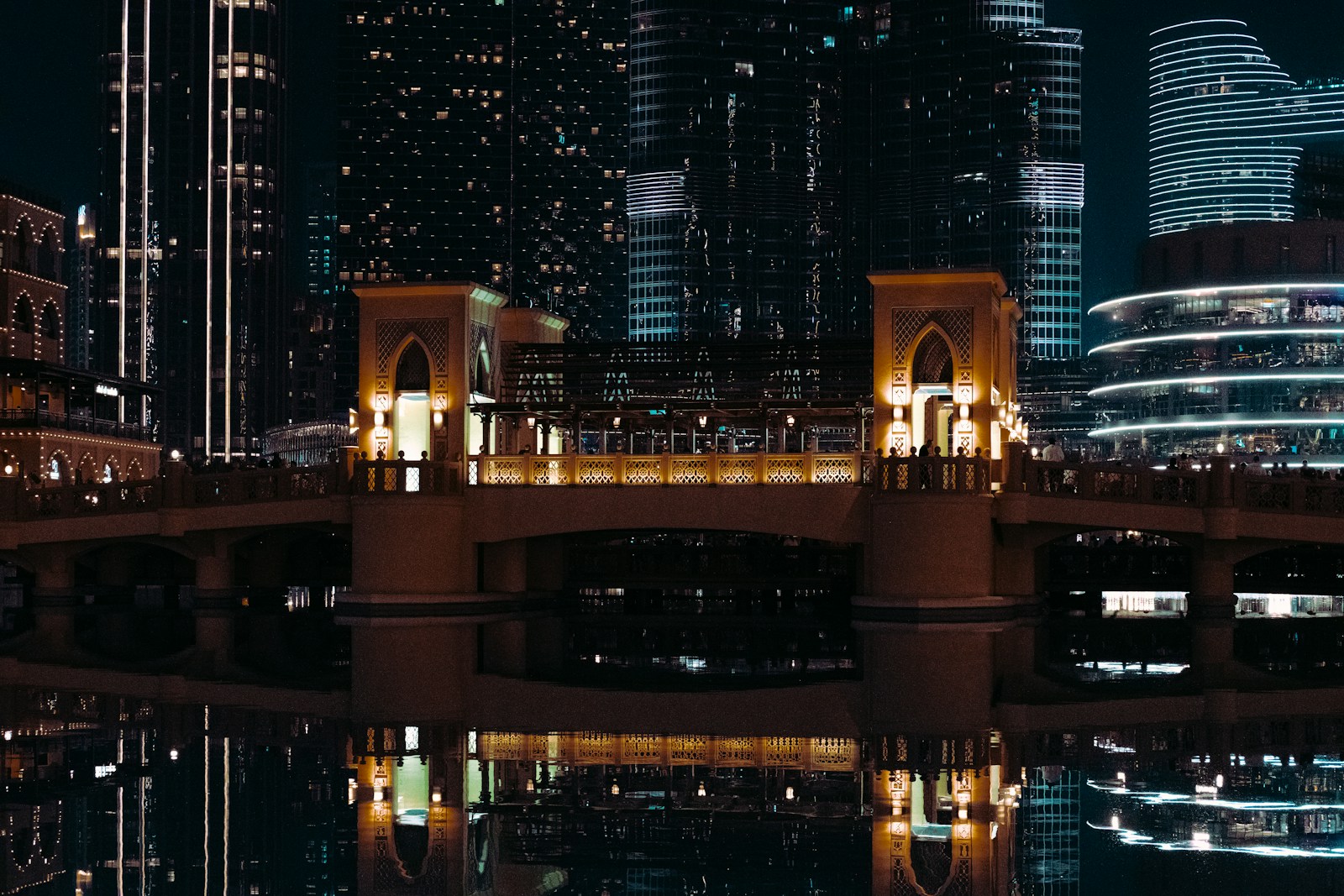
Dubai has one of the most demanding digital audiences in the world. Buyers here research on five-inch screens at 2am, switch between Arabic and English mid-session, expect pages to load in under two seconds, and abandon any site that feels even slightly outdated. If you are searching for web design in Dubai, the bar is no longer "does it look good?" — it is "does it convert a buyer who has already compared you to four competitors before landing on your homepage?"
This guide breaks down exactly what a high-performing UAE website looks like in 2026: the seven things modern buyers expect, the hidden costs of a bad rebuild, realistic price ranges, and the questions you should be asking any agency before you sign a contract.
Why Dubai Web Design Is Different in 2026
Dubai is not just another market with a website checklist. Three local realities make web design here uniquely demanding:
1. The audience is bilingual and multinational. Roughly 88% of Dubai's population is expatriate, and the working language switches constantly between English, Arabic, Hindi, Urdu, Tagalog, and a dozen others. A website built only in English with no thought to Arabic right-to-left (RTL) layout is leaving Emirati and GCC buyers on the table. Even "English-only" B2B sites need Arabic-aware typography, currency formatting, and culturally aware imagery.
2. Mobile dominates everything. Over 96% of Dubai internet users access the web on smartphones, and Google's mobile-first indexing means your mobile experience is your real website. A desktop-only design built in 2019 is, in Google's eyes, a broken site.
3. The quality benchmark is global. Dubai buyers compare your site to Apple, Emirates, Careem, and Noon — not to your nearest local competitor. If your homepage feels like a 2015 WordPress template while your competitor has clean motion design, sub-second load times, and a polished mobile experience, the comparison happens silently and you lose the lead.
The implication: web design in Dubai is no longer a one-time marketing project. It is a strategic asset that has to perform across languages, devices, cultures, and constantly rising user expectations.
If your current site is over three years old, it is almost certainly underperforming on at least four of those dimensions. Talk to our team at Equinode for a free design and performance audit — we will show you exactly where you are losing visitors.
The 7 Things Modern UAE Buyers Expect from a Website
These are the non-negotiables our team checks on every Dubai project before launch.
1. Sub-2-Second Load Time on Mobile
Google research shows that mobile bounce rates jump 32% when page load goes from 1 to 3 seconds, and 90% when it goes from 1 to 5 seconds. In Dubai, where buyers are often comparing five tabs across logistics, hospitality, real estate, or compliance providers, slow load equals lost lead.
Hitting sub-2-second load on mobile in 2026 requires modern architecture: optimized images (WebP or AVIF), lazy loading, minified scripts, a fast CDN with a Middle East node, and ideally a static or hybrid framework like Next.js rather than a heavy WordPress stack with 30 plugins.
2. Arabic-Aware Design (Even If You Are English-First)
You do not need a fully Arabic site to win Dubai buyers, but you do need:
- A typography stack that supports Arabic glyphs cleanly (Cairo, Tajawal, or IBM Plex Sans Arabic)
- Mirror-able layouts that can flip to RTL without breaking
- Imagery that reflects the Gulf's modesty norms and cultural mix
- Currency in AED with optional USD toggle for international visitors
- Phone numbers in international format (+971) so they tap to dial correctly
Even a "small" detail like a Western flag on your contact page can quietly cost you GCC trust. Cultural fluency in design is a Dubai competitive advantage.
3. WhatsApp as a First-Class Conversion Channel
WhatsApp is the dominant business messaging platform in the UAE. A modern Dubai website should have:
- A floating WhatsApp button visible at all times on mobile
- WhatsApp links on every CTA next to phone and email
- Pre-filled message templates so the buyer does not have to type "Hi, I am interested in..."
- Click-to-chat tracking in your analytics so you can measure WhatsApp leads alongside form fills
Sites without WhatsApp are quietly losing 30 to 60% of their potential leads to competitors who make messaging frictionless.
4. Trust Signals Built into Every Page
Dubai buyers do business across borders, with strangers, often for AED 50,000+ contracts. Trust is not a "footer logos" exercise — it has to be visible on every section that asks for action. That means:
- Trade license number visible (DED, DMCC, or free zone)
- VAT number on commercial pages
- Real client logos with permission, not stock placeholders
- Genuine testimonials with name, company, and ideally photo or LinkedIn link
- Office address (even a co-working address is better than none)
- Year founded and team size
A polished design with zero credibility signals reads as a fly-by-night operation. A modest design with strong trust signals converts.
5. Conversion Paths, Not Just "Pretty Pages"
Most Dubai websites we audit have beautiful homepages and dead service pages. A good 2026 site treats every page as part of a conversion funnel:
- Every service page ends with a clear CTA matched to that service
- Pricing or "starting from" hints reduce friction for serious buyers
- Calendly or HubSpot booking embedded directly on contact pages
- Forms with no more than 4 fields on first contact
- Clear next-step language ("We will respond within 4 business hours")
If your current site sends every visitor to one generic "Contact Us" form, you are losing intent-rich traffic that wanted to book a demo, request a quote, or chat now.
6. Search Engine Optimization Built into the Design Phase
Web design and SEO can no longer be sequential projects. By the time the design is "finished" in 2026, dozens of SEO-critical decisions are already locked in: URL structure, heading hierarchy, image sizes, schema markup, internal link patterns, page speed, mobile usability. Retrofitting SEO afterwards costs more and usually fails.
This is one reason our web design team and our SEO specialists work on the same project from day one — the same way we approach all our Dubai SEO engagements. It is also why our launches do not need a "phase 2 SEO project" three months later.
7. Analytics and Lead Tracking from Day One
A Dubai website without proper tracking in 2026 is an asset you cannot manage. The minimum stack:
- Google Analytics 4 with goals configured for every conversion path
- Google Search Console verified and linked to GA4
- Conversion tracking on form submissions, WhatsApp clicks, phone clicks, and downloads
- Heatmap tool (Microsoft Clarity is free) for page-level behavior
- Optional CRM webhook integration (HubSpot, Zoho, Salesforce, Bitrix)
Without this, you cannot answer the most important business question: "Which marketing channel is actually generating revenue?"
Need help with a website rebuild for your Dubai or UAE business? Our team at Equinode has built sites for clients across the UAE, Kenya, and India — including real estate brokerages, compliance software firms, and e-commerce brands. Book a free strategy call on WhatsApp or explore our website design service.
Why Web Design and SEO Cannot Be Separated in Dubai
Almost every "website redesign that killed our traffic" story we hear in Dubai has the same root cause: a design agency built a beautiful site without an SEO engineer in the room.
Common damage we have seen on rebuilt UAE sites:
- URL structures changed without 301 redirects, killing 80% of organic traffic overnight
- H1 tags removed from service pages because "they did not look modern"
- Image-heavy hero sections that destroy mobile load time
- JavaScript-rendered text that Google cannot crawl
- New pages launched without sitemap submission, leaving them un-indexed for months
- Schema markup stripped from product pages, killing rich result eligibility
The cost of these mistakes for a mid-sized Dubai business is often AED 100,000 to AED 500,000 in lost organic revenue in the first year, plus six to twelve months of recovery work.
The fix is structural: integrate technical SEO into the design brief, not after launch. That means SEO sign-off on URL structure, heading hierarchy, schema, image strategy, and redirect maps before any code is shipped.
A Real Dubai Case: Vera Real Estate
When we partnered with Vera Real Estate — a Dubai brokerage selling premium residential and commercial properties — the challenge was clear. The team had a strong portfolio but a website that did not match the quality of the inventory. Slow load times on mobile, no proper property search, no Arabic readiness, weak lead capture, and no analytics integration with the CRM.
The Equinode rebuild focused on five outcomes:
- Performance: Sub-2-second mobile load on every property listing page using a modern image pipeline and lazy-loaded galleries
- Conversion: WhatsApp-first lead capture on every listing, with pre-filled property reference codes so agents knew immediately what the buyer was asking about
- Trust: RERA license, agent ORN numbers, full team page with photos and credentials
- Search: Property listings with structured data so they could appear in Google's rich result formats
- Insight: GA4 + CRM integration so Vera could finally see which marketing channels were producing high-intent property enquiries
The result is a brokerage website that performs as a business asset, not a brochure — a category our lead generation service builds for B2B and high-ticket B2C clients across the UAE.
The same principles apply whether you are running a brokerage, a corporate consultancy like Adil Zone, a logistics firm, or a SaaS product. Modern Dubai web design is conversion design.
The Hidden Costs of Bad Web Design in Dubai
When buyers ask "how much does a website in Dubai cost?", the more useful question is "how much is a bad website costing me right now?" Five quiet leaks we see on most outdated UAE sites:
Cost 1: Lost organic traffic. A 2-second slower site with no mobile optimization can lose 40 to 60% of potential organic visitors. For a Dubai business in real estate, professional services, or e-commerce, that is often AED 50,000 to AED 300,000 in attributable revenue per year.
Cost 2: Lower paid ad ROI. Google Ads quality score is partly driven by landing page experience. Slow, clunky pages mean higher cost-per-click and lower conversion rates — directly inflating your ad spend by 20 to 50%.
Cost 3: Damaged brand trust. A dated design implies a dated business. In Dubai's competitive markets, prospects assume your operations match your homepage.
Cost 4: Failed lead handoff. Forms that go to no one, WhatsApp links that point to the wrong number, calendar embeds that break — every silent failure is a buyer you paid to acquire and then lost.
Cost 5: Compliance and security risk. UAE data protection regulations (PDPL) require basic security and privacy practices. WordPress sites running outdated plugins are a known liability — not just for breaches but for regulatory exposure.
A proper rebuild is not an expense, it is a defensive and offensive investment.
How to Choose a Web Design Agency in Dubai
A short checklist to separate serious agencies from order-takers.
Ask for the actual development stack. "We use modern tools" is not an answer. A serious 2026 agency will tell you whether they build on Next.js, Astro, modern WordPress with proper caching, or Webflow — and why that choice fits your project.
Ask for live site references with measurable results. Not screenshots. Live URLs you can audit yourself, with named clients you can call. Bonus if the agency can show before/after Core Web Vitals scores or organic traffic charts.
Ask how SEO is integrated into the design process. If the answer is "we add SEO after launch" or "we partner with an SEO agency," walk away. Design and SEO must share the same project.
Ask about Arabic and RTL capability. Even if you do not launch in Arabic on day one, your platform should be ready when you are. "We do not really do Arabic" is a red flag for any Dubai-focused agency.
Ask about post-launch ownership. Who hosts the site? Who updates it? Who has admin access? Who owns the domain? A good agency leaves you with full control. A bad agency holds your assets hostage.
Ask about the deployment and CMS workflow. Can your team update content without going back to the agency for every word change? In 2026 the answer should be yes — using a modern CMS like Sanity, Tina, Strapi, or a clean WordPress install.
Ask about analytics setup. Will GA4, Search Console, conversion tracking, and CRM integration be configured at launch? Or will you need to hire a "tracking specialist" three months later?
If an agency cannot answer these confidently, they are selling you a brochure, not a business asset.
How Much Does Web Design Cost in Dubai in 2026?
Honest pricing ranges, based on what we see across the UAE market. These are total project costs, not monthly retainers.
| Site Type | Realistic Range (AED) | What You Get | |-----------|----------------------|--------------| | Basic 5-page brochure site | 8,000 – 18,000 | WordPress or template-based, mobile responsive, basic SEO setup, simple contact form | | Standard SME website | 18,000 – 45,000 | Custom design, 8-15 pages, blog, on-page SEO, GA4 + Search Console, basic schema | | E-commerce site (Shopify or WooCommerce) | 35,000 – 120,000 | Product catalog, payment gateway, inventory, shipping zones, checkout optimization | | Custom B2B / SaaS / real estate site | 60,000 – 250,000 | Custom development, integrations (CRM, MLS, booking), Arabic-ready, full SEO architecture | | Enterprise rebuild | 250,000+ | Multi-language, multi-region, full design system, advanced analytics, ongoing optimization |
Beware of any agency quoting AED 3,000 for a "complete website" — what you will actually receive is a rebadged template, no real SEO, no proper analytics, no Arabic support, and a hosting setup that breaks within months. The cost of fixing that is usually higher than building it properly the first time.
You can also expect a small ongoing maintenance retainer — typically AED 1,000 to AED 5,000 per month — covering hosting, security updates, plugin patches, content updates, and minor design tweaks. Skipping maintenance is how Dubai businesses end up with hacked sites at 2am.
Common Web Design Mistakes Dubai Businesses Make
The same handful of mistakes show up in almost every audit we run for UAE clients.
Mistake 1: Choosing the cheapest quote. A AED 5,000 website is almost always more expensive than a AED 25,000 website over three years, once you factor in lost leads, ad waste, rebuild costs, and brand damage.
Mistake 2: Designing for the founder, not the buyer. "I want it to look like Apple" is rarely good design feedback. Good design is buyer-led: what does your customer need to see, in what order, to take the next step?
Mistake 3: Treating the website as a project, not a product. A site that launches and then gets ignored for two years is a depreciating asset. The best Dubai sites we work with treat the website as a living product, with monthly conversion experiments and quarterly content refreshes.
Mistake 4: No mobile QA before launch. Designs approved on desktop look beautiful in the deck and break on a Samsung Galaxy A14 in the real world. Test on three real devices before signing off.
Mistake 5: Forgetting the after-launch handoff. Without proper documentation, training, and access transfer, the site becomes the agency's hostage. Insist on a written handoff package on day one.
What Sets Equinode Apart for Dubai Web Design
Three things make our approach to UAE web design different.
First, we are platform-agnostic. We have built Next.js sites for SaaS clients, Shopify stores for D2C brands, custom WordPress for content-heavy publishers, and clean Webflow sites for early-stage startups. The platform is chosen for the project, not for our convenience.
Second, design and SEO live on the same team. Our SEO and SEM specialists sit in the design kickoff. URL structure, heading hierarchy, schema, redirect maps, and Core Web Vitals are decided before the first wireframe is approved. The result is sites that launch ranking, instead of sites that launch and then need a rescue project.
Third, we measure everything. Every Equinode site ships with GA4, Search Console, Microsoft Clarity, conversion tracking, and a 90-day post-launch review built into the engagement. You do not just get a website — you get a measurable business asset with a roadmap for improvement.
For a closer look at how this approach plays out in practice, see our case studies on property management in Nairobi for Real Management, our B2B lead generation work for First Compliance in the UAE, and our e-commerce build for P3D Africa.
FAQ: Web Design in Dubai
How long does it take to build a website in Dubai?
For a standard small business site, 4 to 6 weeks from kickoff to launch is realistic. Custom B2B, SaaS, real estate, or e-commerce projects typically run 8 to 14 weeks. Anything longer than 16 weeks usually means scope creep, indecision, or an agency that has overcommitted. We publish a clear week-by-week timeline at kickoff so you always know what is happening.
Do I really need an Arabic version of my website?
Not necessarily — but you do need a website that is Arabic-ready. Even if you launch in English only, your platform should support RTL layout, Arabic typography, and cultural design choices so you can add Arabic later without a full rebuild. For sectors targeting Emirati or GCC buyers (real estate, finance, healthcare, government services), a full Arabic version typically pays for itself within months — and that is exactly what our team helps Dubai businesses with.
Should I use WordPress, Shopify, or a custom build?
It depends on your needs. WordPress is great for content-heavy sites with regular blogging. Shopify is the best choice for most D2C e-commerce. Custom builds (Next.js, Astro) make sense when you need exceptional performance, complex integrations, or a polished SaaS-style experience. We do not push a single platform — we recommend what fits your business model.
How do I know if my current Dubai website needs a rebuild?
If any of these are true, you probably need a rebuild rather than a redesign: page load over 4 seconds on mobile, no Core Web Vitals passes in Search Console, declining organic traffic for 6+ months, no proper analytics or conversion tracking, no WhatsApp integration, no Arabic readiness, or design that visibly predates 2022. A free audit will tell you exactly which.
Can I keep my existing domain and content during a rebuild?
Yes — and you should. A proper rebuild keeps your domain, preserves your indexed URLs (with 301 redirects where structure changes), migrates all valuable content, and protects your existing SEO equity. A rebuild that loses your domain authority is malpractice.
What happens after the website launches?
A serious agency includes a 60 to 90 day post-launch period covering bug fixes, performance tuning based on real traffic, conversion rate experiments, and content updates. After that, most Dubai businesses move to a small monthly retainer for hosting, security, content updates, and ongoing optimization. We never lock clients into long contracts — the work has to keep earning the relationship.
Ready to Grow Your Business Online?
At Equinode, we don't do cookie-cutter. Whether you're scaling in India, breaking into East Africa, or building a presence in the UAE — our team builds strategies that actually move the needle.
Email Us | WhatsApp Us | Call: +971 50 828 7969
We respond within 24 hours.