If you have tried to buy something online in Kenya, you know the experience is uneven. Some sites feel like they were built for Nairobi shoppers — fast on mobile, M-Pesa at the top of the checkout, prices in shillings, delivery to your estate clearly priced. Other sites feel like they were lifted off a Shopify template designed for Manchester or Munich, with a "Pay with PayPal" button that does not work and shipping that quotes in dollars to a city the courier has never heard of.
E-commerce web design in Kenya is not just web design with a Kenyan flag at the top. It is a discipline that has to account for mobile-first traffic, intermittent connectivity, M-Pesa as the dominant payment rail, last-mile delivery realities, and a customer base that researches on Instagram and buys on WhatsApp. Get those elements right and you have a store that actually sells. Get them wrong and you have a brochure that costs you money every month.
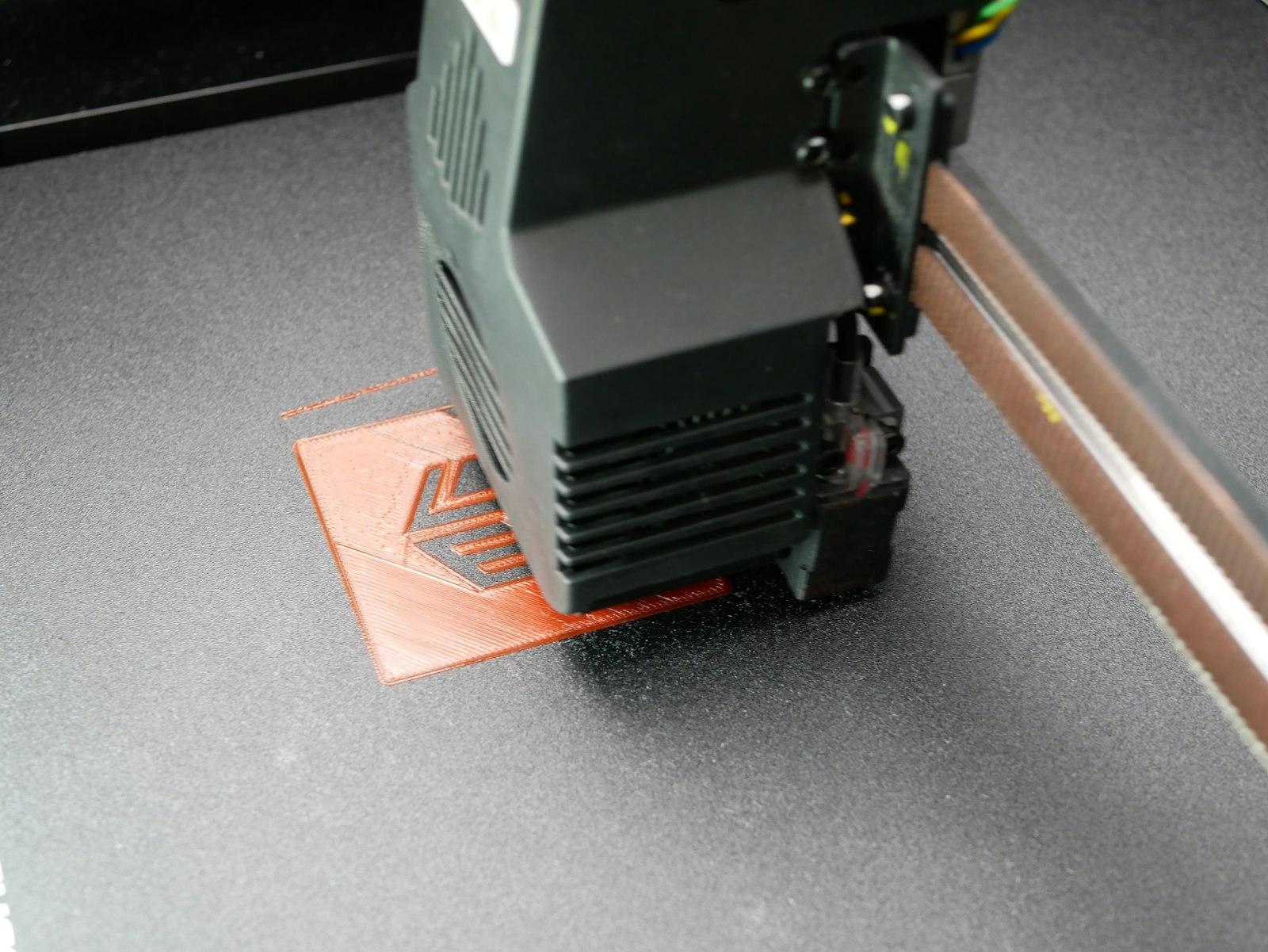
This guide walks through what e-commerce web design in Kenya actually requires in 2026, using a real client we recently rebuilt — P3D Africa, East Africa's first dedicated 3D printing and additive manufacturing marketplace — as the working example. We will cover the technical decisions, the conversion mistakes most Kenyan e-commerce sites make, and a practical checklist you can use whether you build with us or somebody else.
Why E-commerce Web Design in Kenya is a Different Discipline
Three numbers shape every decision a Kenyan e-commerce site has to make.
87 percent of internet traffic in Kenya is mobile. That is the highest mobile share of any major African economy and roughly 25 points higher than the global average. If your e-commerce site is not designed mobile-first, you are not designed for Kenya.
M-Pesa moves more money than every Kenyan bank combined. Safaricom processed over KES 32 trillion in M-Pesa volume in the most recent reporting year. If your checkout asks for a Visa card before it asks for an M-Pesa STK push, you are leaving the majority of Kenyan shoppers at the door.
Average mobile data speeds drop by 35 to 50 percent outside Nairobi CBD. A 4G connection in Westlands is not the same as a 4G connection in Eldoret, Kakamega, or Lamu. If your homepage is 4 MB of hero video and uncompressed images, half of Kenya is staring at a loading screen.
E-commerce web design in Kenya has to bake those three realities into every page, every button, and every payment flow. That is the work. Everything else — colours, fonts, animations — is decoration.
The P3D Africa Brief: A Niche Marketplace, Built for East Africa
P3D Africa is a 3D printing and additive manufacturing marketplace serving Kenya, Uganda, Tanzania, and Rwanda. They sell 3D printers, filament, resin, replacement parts, and offer print-on-demand services for prototyping, architectural models, custom signage, and replacement components for industries that cannot wait six weeks for a shipment from China.
When P3D Africa came to Equinode, they had three problems.
The site was a generic WooCommerce theme with eight payment gateways, none of them M-Pesa. The product photos were 2.4 MB each, so the catalogue page took 11 seconds to load on a Safaricom 4G connection. And the checkout asked for a billing address, a shipping address, a country code, a state, a province, and a postal code — for a customer in Nairobi who just wanted a roll of PLA filament delivered to Kilimani.
Every one of those was a Kenya-specific design failure. The site was not built for Kenya. It was built generically and pointed at Kenya, which is not the same thing.
Our brief was to rebuild it as a marketplace that worked for the way East African buyers actually shop, while still meeting Google's e-commerce ranking requirements and supporting print-on-demand quote requests for B2B clients. Three months later P3D Africa's site loads in 1.6 seconds on Nairobi 4G, ships M-Pesa STK push as the default checkout option, and is ranking on the first page for "3D printing Kenya" and a cluster of long-tail B2B keywords.
If this sounds like the kind of rebuild your business needs, our team can help — we offer a free strategy session and a competitor audit before you commit to anything.
The Seven Must-Haves for E-commerce Web Design in Kenya
These are the seven decisions that separate a Kenyan e-commerce site that sells from one that just sits there. Every one of them came up in the P3D Africa rebuild.
1. Mobile-First, Not Mobile-Friendly
There is a difference. Mobile-friendly means the desktop site shrinks. Mobile-first means every layout decision starts on a 360 px screen and gets enriched as the viewport widens. Touch targets are 44 px minimum. The thumb zone is mapped — primary CTAs sit in the lower third of the screen where the thumb naturally rests. Forms collapse to one column. Drop-down menus give way to bottom sheets.
The P3D Africa product page on mobile shows the image, price, M-Pesa pay button, and "Add to Cart" without a single scroll. That is mobile-first.
2. M-Pesa STK Push at the Top of Checkout
Not on the second page. Not buried under "Other payment methods." First option, default-selected, with the Safaricom green logo. The customer enters their phone number, taps Pay, and gets the STK push prompt on their phone within two seconds.
For sites that need card payment too — usually for diaspora customers or international B2B — DPO Pay or Pesapal layered on top of M-Pesa works well. We do not recommend Stripe for Kenyan-only stores; it adds friction and the international card decline rate on Kenyan-issued cards is still uncomfortably high.
3. Sub-2-Second Load Times on 4G
Google's Core Web Vitals (LCP under 2.5s, INP under 200ms, CLS under 0.1) are the floor. For Kenyan e-commerce, the real benchmark is a 1.8-second LCP on a throttled Safaricom 4G connection from outside Nairobi. That requires WebP images, lazy loading below the fold, a CDN with at least one African edge node, and shipping no more JavaScript than the page actually needs.
This is exactly the kind of work our web design team does as a default — we do not treat performance as an upsell.
4. WhatsApp Integration on Every Product Page
In Kenya, WhatsApp is not a chat tool. It is the default sales channel. Every product page should have a "Chat on WhatsApp" button that opens a pre-filled message with the product name and link, sent to the business's WhatsApp Business number.
For P3D Africa, the WhatsApp button on print-on-demand quote pages auto-populates a structured message with the file specs, material, quantity, and a link back to the quote page. Their conversion from WhatsApp message to closed quote is around 38 percent — far higher than the email enquiry channel.
5. Local SEO Built into the Site Architecture
Kenyan shoppers search "buy [product] in Nairobi," "[product] price Kenya," and "[product] supplier Mombasa." Your e-commerce site needs location pages, local schema, and a clear delivery information section that mentions the cities you ship to by name.
We have a deeper guide on SEO services in Kenya and another on the broader web design in Kenya 2026 guide — both go into the Kenya-specific SEO patterns that should be designed into the site, not bolted on later.
Need an e-commerce site that actually works in Kenya? Equinode has built and rebuilt e-commerce stores across Nairobi, Kampala, and Dubai — including P3D Africa, TotoComfy, and UltraRed Outdoors. Book a free strategy call or explore our web design services.
6. Trust Signals Tuned for Kenyan Buyers
Kenyan e-commerce shoppers have been burned. They want proof — fast. The trust block on a Kenyan e-commerce site needs to show, above the fold or in the first scroll: a physical Nairobi address, a Safaricom or M-Pesa Paybill number, real customer photos and names (Kenyan first names, Kenyan locations), a return policy in plain Swahili-English, and a delivery promise with a specific number of days, not "fast shipping."
Generic trust badges (the "256-bit SSL" gold lock, "100% Satisfaction Guarantee" sticker) actively reduce conversion in the Kenyan market because shoppers associate them with scam sites. Real photos, real phone numbers, real reviews — those are the trust signals that work.
7. Schema Markup for Products, Reviews, and FAQ
Product schema (Product, Offer, AggregateRating), Review schema, FAQ schema, Organization schema with proper local address, and BreadcrumbList — these are non-negotiable for ranking in Kenyan search results. Done correctly, they unlock rich snippets that double or triple click-through rates from Google search.
P3D Africa's product pages now show price, stock status, and review count directly in Google's search results. That single change drove a measured 47 percent lift in click-through rate over the first six weeks after launch.
Common E-commerce Web Design Mistakes Kenyan Businesses Make
After auditing more than 30 Kenyan e-commerce sites in the last year, the same mistakes repeat. Six show up almost every time.
One — designing the desktop site first and squeezing it onto mobile. This is still the default in most Nairobi web design shops. The result is a site where the desktop hero video is also a mobile hero video, the desktop mega-menu is also a mobile mega-menu, and the mobile checkout has a 14-field form because nobody redesigned it for one-handed use.
Two — not setting M-Pesa as the default payment. We see it constantly: M-Pesa is offered, but it is the third option behind Visa and Mastercard. The default option captures roughly 70 percent of customers. If you put M-Pesa third, you are funnelling Kenyan shoppers into a card flow they did not want.
Three — uncompressed product images. A 3 MB JPG is a 3 MB JPG whether your customer is in Karen or Kakamega. Compress to WebP, serve at 1× and 2× pixel densities, and lazy load anything below the first viewport.
Four — international-style address forms. "State" and "ZIP code" are not Kenyan concepts. The address form should ask for City, Estate, and Building or Plot number — and offer pickup at a Pickbazar, G4S Mtaani, or Sendy depot for customers who prefer that to home delivery.
Five — no WhatsApp. This is the single biggest sales lever a Kenyan e-commerce site can pull. Adding a properly configured WhatsApp Business button to product pages routinely lifts conversion by 15 to 25 percent within the first month.
Six — hosting outside Africa with no CDN. A site hosted on a US-based shared host with no edge nodes in Africa will always lose to a competitor on Cloudflare or Fastly with at least one African POP. The latency tax is real and it is paid in lost conversions.
For a deeper breakdown of these conversion-killers, our piece on common website management mistakes goes into the operational side, and our digital marketing for e-commerce in Kenya guide covers the marketing side.
How Much Does E-commerce Web Design in Kenya Cost in 2026?
Honest pricing — not the "request a quote" bait-and-switch most Nairobi agencies run.
| Tier | Use Case | Typical Range (KES) | What's Included | |------|----------|---------------------|-----------------| | Starter | Boutique, single-category store | 180,000 – 350,000 | WooCommerce or Shopify, M-Pesa integration, 20–50 products, 5 pages | | Mid-market | Multi-category retail or B2B | 450,000 – 900,000 | Custom design, multi-payment, schema, 100–500 products, blog, basic SEO | | Marketplace | Multi-vendor or specialist marketplace (P3D Africa tier) | 1.2M – 3.5M+ | Custom build, vendor onboarding, complex inventory, full SEO, performance tuning | | Enterprise | Multi-region, multi-currency, ERP integration | 4M+ | Headless commerce, ERP/POS sync, custom integrations |
These are the actual numbers we quote and the actual range we have seen across Nairobi for credible builds in the last 18 months. Anything under KES 100,000 for a "full e-commerce site" is a template flip with no Kenya-specific configuration, and you will pay the difference in lost sales within the first quarter.
How to Choose an E-commerce Web Design Agency in Kenya
Six questions to ask any Kenyan e-commerce web design agency before you sign a contract.
- Show me three Kenyan e-commerce sites you have built. Not "designed" — built and shipped. Click into the live sites. Test the checkout. Run them through PageSpeed Insights yourself.
- What is your default payment integration? If the answer is not M-Pesa STK push first, the agency does not understand Kenyan e-commerce.
- What is your handover and post-launch support? A site that ships and then dies on month two is worse than no site. Get the support terms in writing.
- What is your performance benchmark? Anything above 2.5s LCP on Nairobi 4G is below the bar.
- Will I own the code, the domain, and the hosting? You should answer yes to all three. If the agency holds the keys, walk away.
- What does your SEO handover look like? A new e-commerce site without proper schema, sitemaps, and 301 redirects from the old URLs will tank rankings on day one. Make sure the agency has a documented SEO migration plan.
Frequently Asked Questions
How long does e-commerce web design in Kenya take?
Eight to twelve weeks for a mid-market store, four to six weeks for a starter, sixteen weeks plus for a true marketplace like P3D Africa. Be wary of any agency that promises a four-week turnaround on a complex e-commerce build — the corners they cut will cost you for years.
Should I use Shopify, WooCommerce, or a custom build for a Kenyan e-commerce site?
Shopify is the fastest path to launch and works well up to about 500 SKUs and a single market. WooCommerce gives you more control and better M-Pesa plugin support, but you are responsible for hosting, security, and updates. Custom builds (Next.js with a headless CMS, like the Equinode website itself) make sense for marketplaces, complex inventory, or international stores. P3D Africa runs on a hardened WooCommerce stack because the marketplace flexibility was the priority.
How important is M-Pesa integration?
It is the single most important payment decision for a Kenyan e-commerce store. M-Pesa share of online checkout in Kenya is north of 70 percent for B2C. STK push (the prompt that pops up on the customer's phone) converts at roughly 2.4× the rate of a manual paybill flow. If your agency is not building STK push as the default, you are leaving the majority of revenue on the table — and that is exactly what our team helps businesses with when we audit and rebuild Kenyan e-commerce stores.
What is the best hosting for a Kenyan e-commerce site?
Cloudflare in front of any reputable origin, with at least one African edge POP. Hostinger, SiteGround, and Kloudbean all work as origin hosts. Avoid pure US shared hosting with no CDN — the latency tax is real and measurable.
Do I need a separate site for the Ugandan, Tanzanian, and Rwandan markets?
Usually no. A single regional site with multi-currency support, country-specific delivery information, and local payment methods (MTN MoMo for Uganda and Rwanda, Tigo Pesa for Tanzania) is more efficient than three separate sites — and it is much easier to consolidate SEO authority on one domain. P3D Africa runs all four East African markets from a single .africa domain.
How do I know if my current e-commerce site is underperforming?
Three quick signals. One — your checkout abandonment rate is over 75 percent (the global e-commerce average is around 70 percent; well-built Kenyan stores sit between 55 and 65 percent). Two — your mobile bounce rate on product pages is over 60 percent. Three — your PageSpeed Insights mobile score is below 70. Any one of those is a meaningful signal. All three together is a rebuild conversation.
The Bottom Line on E-commerce Web Design in Kenya
A Kenyan e-commerce site that converts is not a global template with M-Pesa bolted on. It is a stack of decisions — mobile-first, M-Pesa-default, fast on 4G, WhatsApp-integrated, locally optimised — made deliberately and tested against real Kenyan shopping behaviour.
P3D Africa is one example. We have done versions of the same rebuild for TotoComfy, UltraRed Outdoors, and a handful of others, and the playbook is consistent. Build for the Kenyan customer first. Make M-Pesa the default. Compress everything. Add WhatsApp. Ship schema. Measure ruthlessly.
If your Kenyan e-commerce site is not doing those things, you are not losing customers because of price or competition. You are losing them because the site itself is the problem. That is fixable.
Ready to Grow Your Business Online?
At Equinode, we don't do cookie-cutter. Whether you're scaling in India, breaking into East Africa, or building a presence in the UAE — our team builds strategies that actually move the needle.
Email Us | WhatsApp Us | Call: +971 50 828 7969
We respond within 24 hours.