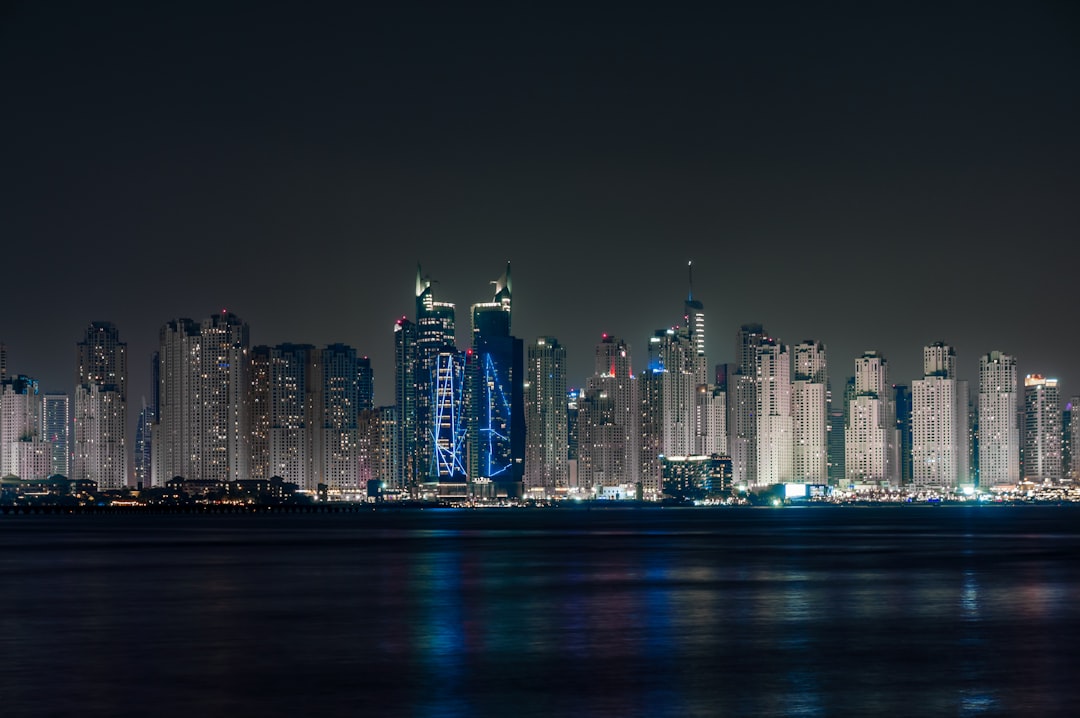
Social media marketing in Dubai is not a translation job. The playbook that wins in London, New York, or Mumbai will quietly lose money here, because the audience, the platforms, the calendar, and the regulators are all different. The brands that grow on UAE social in 2026 are the ones that build for Dubai's reality from day one — not the ones who copy a Western template and hope.
This is the complete 2026 playbook. It is written for the founder, marketing director, or business owner who is either choosing a Dubai social media agency for the first time, replacing one that is not delivering, or running social in-house and trying to figure out why the numbers are flat. We will cover what makes Dubai social different, the five platforms that actually matter in the UAE, the content pillars that convert, realistic 2026 cost ranges, how to vet an agency, KPIs that matter (and the vanity metrics to ignore), and the seasonal traps to plan around.
If you want the short version: Dubai social is mobile-first, video-first, multilingual, regulator-aware, and built around three high-stakes commercial windows a year. The brands that win treat those constraints as a brief, not an obstacle.
Why social media marketing in Dubai is its own discipline
A lot of agencies will tell you that "social is social" and the principles travel. They are wrong, at least for the UAE. There are five structural differences that change the playbook from the first post onward.
1. Three audiences inside one country. Dubai is not a single market. It is at minimum three: Emirati nationals (premium, brand-loyal, family-oriented, Arabic-first), high-income expats from the West (English-first, value transparency and lifestyle signals), and a much larger working-expat audience from South Asia, the Levant, and the Philippines (price-sensitive, community-driven, mixed languages). A single creative campaign that ignores this fractures on contact. Brand strategy starts by deciding which audience the social channel is actually for — and which is on a different channel entirely.
2. Arabic is not optional for serious brands. You can run a successful English-only D2C brand in Dubai if the product is positioned for expats. The moment you want enterprise sales, government contracts, regional reach, or genuine national presence, Arabic is required. Not machine-translated Arabic — properly written, dialect-aware Arabic that respects MSA for formal posts and Gulf dialect for casual ones.
3. Regulators have rules, and they get enforced. The UAE's Telecommunications and Digital Government Regulatory Authority sets the framework for digital communications. Influencer marketing is licensed — every paid creator working in the UAE legally needs a National Media Council e-licence, currently administered through the UAE Media Council. Promotions, prize draws, and discount claims have their own approvals. A campaign that would pass in the US or UK can be flagged here. Good agencies build compliance in at the brief stage, not as a last-minute legal review.
4. The commercial calendar is concentrated. Three windows do most of the heavy lifting in UAE retail social: Ramadan (March-April 2026), Dubai Shopping Festival/DSF (December-January), and back-to-school (August-September). Each has its own creative grammar — Ramadan is family, generosity, and quiet luxury; DSF is bold, deal-led, gamified; back-to-school is functional, deal-stacking, multi-cart. Brands that show up the same way year-round leave money on the table.
5. Platform mix is different. TikTok is bigger in the UAE than most Western markets realise. Snapchat — written off elsewhere — has serious daily reach with Emirati and GCC audiences. LinkedIn is unusually commercial in Dubai because of the corporate density. X (Twitter) still matters for news, government, and crisis comms. Instagram is the workhorse. Facebook is for older demographics and remarketing. If your agency builds for IG/FB only because that is what they know, you are missing the audiences that actually convert.
Get those five things right and you have the foundation. Get them wrong and no amount of paid spend will save the channel. If you are not sure which of those five you are getting wrong, our team can audit your current social setup in a free strategy session and tell you exactly where the gap is.
The 5 platforms that matter in the UAE — and which you can skip
Every Dubai agency will pitch you a "multi-platform strategy." The honest answer is that most brands should be deep on two platforms and present on a third. Here is how to think about each of the five that matter in 2026.
Instagram — the default workhorse
Instagram is still the dominant social platform for Dubai consumer brands. Reels are where attention lives, Stories are where intent gets captured (DM-to-cart, swipe-up offers, polls for product validation), and the feed is now a portfolio rather than a content engine. A Dubai brand without strong Reels output is essentially invisible on the platform.
What works on Dubai IG in 2026:
- Short-form vertical Reels (15-45 seconds), shot mobile, captioned bilingually.
- Carousels for explainer content (how-tos, before-and-after, product education).
- Stories for daily presence — behind-the-scenes, polls, link stickers to landing pages.
- DMs as a sales channel. Treat them like a queue, not an inbox.
- Influencer collaborations with creators who hold a current UAE media licence.
TikTok — the discovery engine
TikTok in the UAE is not a teenager platform. It is where mid-twenties to mid-thirties professionals, families, and Emirati youth spend hours a week. The For You algorithm is unusually generous to small brands that post consistently, which makes TikTok the single best paid-equivalent organic channel in Dubai right now.
The pattern that works: 5-7 short videos per week, hooks in the first 1.5 seconds, native creative (not repurposed IG Reels), and a willingness to be useful before being salesy. TikTok Shop is gaining traction in the UAE, and brands that connect their catalogue early get an organic visibility boost.
LinkedIn — the B2B unlock most brands ignore
Dubai's corporate density is unusual. The DIFC, DMCC, JLT, Business Bay, and Downtown corridors hold a concentration of finance, consulting, technology, and legal firms that you would normally see across an entire country. LinkedIn is the front door to all of them.
For B2B brands, LinkedIn in Dubai is where six-figure deals start. It is also where the right kind of personal brand — a founder posting twice a week, employees engaging with relevant posts, thoughtful long-form content from senior staff — outperforms paid by a wide margin. This is exactly the kind of LinkedIn-led pipeline our lead generation service builds for B2B clients targeting the UAE.
Snapchat — the GCC stealth channel
Snapchat is dismissed by Western agencies and used heavily by GCC nationals. If your audience includes Emirati youth and families, Snapchat Discover and Stories matter. The platform is also strong for hyper-local promotions — gym chains, salons, restaurants, and retail locations regularly outperform IG on Snap for in-market reach.
You do not need to lead with Snap. But if your audience skews UAE-national, ignoring it costs you reach.
X (Twitter) — small audience, high stakes
X has shrunk for most consumer brands. In the UAE, it remains relevant for three things: news brands and journalists; government and regulator communication; and crisis or reputation management. If your brand has any institutional or media-facing angle, X is non-negotiable. If you are a pure D2C consumer brand, you can de-prioritise it.
What you can skip
Pinterest is small in the UAE outside specific niches (weddings, interiors, food). Threads has not become a primary channel here. Reddit is an English-speaking expat habit, but the audience is small. None of these should be the third platform in your stack unless you have a clear reason.
Confused about which platforms your business should lead with in Dubai? Our team at Equinode has helped 25+ businesses across the UAE, Kenya, and India build social channels that actually drive pipeline — not just likes. Book a free strategy call or explore our services.
Content pillars that convert in Dubai
Once the platform mix is right, the next question is what to actually post. The brands that grow on UAE social do not chase trends — they build a content library on four or five repeatable pillars and run them in rotation. Here are the pillars that consistently work in Dubai across categories.
1. Product in real life. Not studio shots. The product being used by a real customer, in a real Dubai context — Marina apartments, JBR beach, Downtown rooftop, family majlis, school run, business meeting at a DIFC cafe. Context sells more than perfection.
2. Founder or expert voice. Dubai customers respond strongly to a face behind the brand. A founder talking about why they built the product, an in-house expert explaining the category, a chef walking through a recipe — these consistently outperform branded ads. This is the engine behind LinkedIn personal-brand growth and a huge part of TikTok organic.
3. Community and culture. Posts that engage with the city — Ramadan, National Day, Eid, DSF, Diwali, Onam, Christmas — without forcing a sales angle. Brands that show they understand the calendar earn permission to sell during the windows that matter.
4. Education and explainer. Dubai customers research. A clear, useful piece of content that explains the category — how to choose a residential building, how to read a property contract, what's actually in your skincare, how compliance audits work — builds the kind of trust that converts on the second touch.
5. Social proof. UGC, customer reviews, before-and-afters, transformation stories, awards, certifications. Dubai is a credentialed city. People look for proof before buying, especially at premium price points.
The mix matters as much as the pillars. A workable rotation for a Dubai brand on Instagram looks like 35 percent product-in-context, 20 percent founder/expert, 15 percent community, 15 percent education, 15 percent social proof. Adjust per category — B2B leans much harder on education and expert voice; F&B leans harder on community and product context.
The cost of social media marketing in Dubai (2026 ranges)
The honest answer is that "Dubai social media marketing" costs anywhere from AED 5,000 to AED 80,000 per month depending on what you actually need. Anyone giving you a single number without diagnosing your business is selling, not advising. Here are the realistic ranges in 2026.
AED 5,000-12,000 per month — Foundational social. What you get: one or two platforms managed (typically IG + one), 12-16 posts per month, basic Stories cadence, some Reels, monthly reporting. Right for: small businesses, single-location F&B, early-stage D2C, service businesses with limited spend. Not enough for: brands needing video-led growth, B2B pipeline targets, or multi-language output.
AED 12,000-25,000 per month — Growth social. What you get: two to three platforms, 20-30 pieces of content per month including video, paid social management (separate budget), monthly creative shoots, influencer partnerships, bilingual output. Right for: D2C brands ready to scale, multi-location retail, B2B companies starting LinkedIn properly, real estate developers. This is the sweet spot where social starts to drive measurable revenue.
AED 25,000-50,000 per month — Performance social. What you get: full-funnel content, three to four platforms, weekly video production, dedicated community management, full creator/influencer programme, paid social management at scale, A/B creative testing, attribution reporting. Right for: established brands, fast-growth scale-ups, regional rollouts, brands in competitive categories (real estate, beauty, F&B, e-commerce).
AED 50,000+ per month — Enterprise social. What you get: in-house-quality output run by an agency, branded content series, premium creator partnerships, integrated paid + organic + influencer campaigns, dedicated strategy lead. Right for: enterprise brands, hospitality groups, large retailers, multi-market campaigns.
Paid media spend is separate. Always. A reputable Dubai agency will quote you a management fee for creative and operations, and a separate paid media budget that you commit to platforms. If anyone bundles them in a way you cannot separate, ask why. Industry-standard paid social management fees in 2026 run 12-18 percent of paid spend, or a flat retainer for brands spending under AED 30,000/month in paid.
How to choose a social media agency in Dubai
There are hundreds of agencies in Dubai. Most are competent. A smaller number are excellent. A few should not be running a client's social at all. Here is how to tell the difference in a single discovery call.
Ask which platforms they recommend — and why. A good agency will push back if your platform mix is wrong. A weak agency will agree to whatever you suggest because they want the retainer.
Ask to see vertical-relevant work. A Dubai agency that has done strong work for restaurants tells you nothing about whether they can run B2B SaaS. Match the vertical or accept that the first six months are an experiment.
Ask who actually writes the content. Some agencies have senior staff in the pitch room and junior interns running your account. Find out who your day-to-day contact is, who writes captions, who edits Reels, and whether the work is local or outsourced overseas.
Ask about Arabic capability. If Arabic matters to your audience, your agency needs native Arabic writers in-house — not freelancers, not Google Translate, not "we will hire someone if you sign."
Ask about influencer compliance. A serious Dubai agency will mention media licensing without prompting. If they don't bring it up, ask. If they hand-wave the answer, walk away.
Ask for KPIs in the proposal. Not vanity metrics. Real KPIs tied to your business — qualified DMs, link-in-bio clicks, attributed conversions, lead form completions, foot traffic proxies, search interest in branded terms. If they pitch "follower growth" as the headline KPI, they are pitching themselves a lazy contract.
Check their own social. It is astonishing how many Dubai agencies have dormant or weak social channels themselves. The agency that does not invest in its own brand will not invest in yours.
Case study: First Compliance — LinkedIn as a B2B pipeline engine
First Compliance is a Dubai-based KYC/AML software company we work with at Equinode. They sell to compliance officers and operations directors at financial institutions across the UAE. Their buyer is not on Instagram on a Tuesday morning. They are on LinkedIn.
The social strategy for First Compliance is unusual but appropriate: 80 percent LinkedIn, 15 percent X (regulatory news), 5 percent IG (recruitment and culture). Content pillars lean heavily on education and expert voice — explainer posts on FATF updates, breakdowns of new ADGM/DIFC compliance circulars, founder commentary on industry shifts, case studies of how their software solves a specific compliance gap.
The result is a steady inbound flow from compliance leaders at banks, exchanges, and fintech firms who recognise the brand by the time the sales team reaches out. The lesson generalises: pick the platform your buyer actually uses, post for them and only them, and let the rest of the social map be empty if it has to be.
Case study: Vera Real Estate — IG and Reels for property in Dubai
Vera Real Estate operates in Dubai's property market — secondary sales, off-plan, and a growing rental portfolio. Real estate in Dubai is a saturated social category. The agencies that win on it have figured out something specific: property buyers want walking video.
For Vera, the social engine is Reels. Walking-tour Reels of new listings, founder voice-overs explaining the build quality, neighbourhood breakdowns ("what AED 2.5M actually gets you in JVC"), market commentary on launches and prices. Saves and shares are the leading indicator — a Dubai buyer who saves a Reel is a buyer who is researching. Booked viewings follow saves, not likes.
Cross-channel, Vera uses Stories for live launches, IG DMs as a viewing-booking channel, and LinkedIn for founder commentary on the market. The same playbook would not work for a B2B SaaS or a quick-serve F&B brand. The point is that the social strategy maps to the buying journey, not to a generic template.
KPIs that matter in Dubai social (and the ones that don't)
Most Dubai agencies report on the wrong things. Followers, post likes, and impressions are reported because they are easy to count, not because they correlate with revenue. Here are the metrics that actually matter in 2026, by platform.
Instagram & TikTok: Saves, shares, profile visits from a single post, link-in-bio click-through, DM-to-conversation rate, Story sticker engagement (polls, questions, link clicks), attributed conversions from social. Followers are a lagging vanity number. Saves are a leading buying signal.
LinkedIn: Profile views by ICP, connection request acceptance rate from target accounts, comments from decision-makers (not random network), DM open rate on outbound, attributed pipeline from social-touched accounts. Likes from your own team do not count.
Snapchat: Story open-through rate, swipe-up to website, Snap Ad attributable conversions, local reach in target geos.
X: Reply rate from journalists and analysts, mentions from credible accounts, list adds, attributed clicks from bio link campaigns.
Cross-channel: Search interest in your brand name (Google Trends), direct website traffic from social-active periods, GBP profile interactions in Google Business Profile for location brands. If your social work is real, branded search and direct traffic both rise within three months.
If your current report shows "47k impressions" as the headline number, ask your agency for the conversion data instead. And if you are not getting clear answers about what actually moves your pipeline, that's exactly what our team helps businesses untangle.
The Ramadan and DSF calendar trap
Every brand operating in the UAE eventually trips on the seasonal calendar. Here is the version you should plan around.
Ramadan (March-April in 2026). Daytime engagement drops, evening engagement spikes after iftar (around 6:30-10:30pm). Tone shifts to family, generosity, quiet luxury, charitable giving. Brands that run normal sales-led posts during the day get muted. Brands that run evening-tuned, culturally-aware creative win the month — and then convert in the post-Eid retail bump.
Eid al-Fitr and Eid al-Adha. Two- and three-day windows where almost all retail commerce concentrates. Plan creative two weeks in advance; consider Eid-specific bundles or gifting messaging.
Dubai Shopping Festival / DSF (mid-December to late January). Aggressive promotional grammar works here in a way it does not the rest of the year. Discounts, gamification, raffle mechanics, last-day urgency all land. Brands that bank their biggest spend for DSF outperform brands that spread evenly.
Back-to-school (August-September). Driven by expat family populations. Functional, deal-stacking, multi-cart messaging. Smaller window than Ramadan or DSF but a clear sales spike for relevant categories.
National Day (December 2). Patriotic, Emirati-led, restraint over volume. Foreign-coded brands that try too hard here look opportunistic. Local and locally-respectful messaging wins.
Plan the year by anchoring these four windows first and filling the rest of the calendar around them. Most agencies build the calendar the wrong way around — they fill the year and then react to the windows when they arrive.
Frequently asked questions about social media marketing in Dubai
How much does social media marketing cost in Dubai per month?
Realistic 2026 ranges sit between AED 5,000 for foundational single-platform management to AED 50,000+ for full enterprise programmes. The sweet spot for most growing brands is AED 12,000-25,000 per month, which buys a two-to-three-platform programme with bilingual content, paid social management, and influencer partnerships. Paid media spend is always quoted separately from agency fees.
Do I need an Arabic content strategy if my customers speak English?
If your customer base is entirely English-speaking expats — yes, you can run English-only. If you want any reach into Emirati audiences, GCC nationals, or large pockets of the expat community who consume Arabic content, Arabic is required. A bilingual approach with light translation does not work; the Arabic side needs to be written natively by writers who understand both MSA and Gulf dialect.
Is TikTok worth it for a B2B company in the UAE?
For most B2B companies, no — LinkedIn and selectively X are the right platforms. The exception is when your B2B brand has a strong founder personality, an educational angle that travels (compliance, finance, tech explainers), or a recruitment objective. TikTok in those cases can build founder reach that converts on LinkedIn later.
How long before I see results from social in Dubai?
Realistic expectations: meaningful organic traction in three to four months on Instagram and TikTok, six to nine months on LinkedIn for B2B, faster on paid social (two to four weeks for first attributable conversions if creative is strong). Brands that change agency every 90 days because "it isn't working yet" are the brands that never compound. Pick a partner, give them six months, and judge them on real KPIs — not vanity. And that's exactly what our team helps businesses with when they bring us in mid-stream.
Do I need to register influencer campaigns in Dubai?
Yes — paid influencers operating in the UAE require a National Media Council e-licence. A reputable agency will only work with licensed creators and will document the compliance in your campaign brief. Working with unlicensed creators exposes both the creator and the brand to regulatory action.
Should I use a Dubai-based agency or work with a remote agency overseas?
For Dubai-focused work, local matters. Time zone, cultural fluency, regulatory knowledge, Arabic capability, on-the-ground production, and creator relationships are hard to replicate from outside the UAE. A remote agency can support strategy or specialist services, but day-to-day Dubai social is best run by a team that lives the market.
Ready to Build a Dubai Social Strategy That Actually Converts?
At Equinode, we don't run social as a content factory. We build channels that drive pipeline — for B2B clients like First Compliance in Dubai's compliance market, for property brands like Vera Real Estate, for Adil Zone in business setup, and for growing brands across Kenya, the UAE, and India.
Whether you're starting from zero, replacing an underperforming agency, or scaling a programme that's almost working, our team will tell you exactly what to keep, what to cut, and what to build next.
Email Us | WhatsApp Us | Call: +971 50 828 7969
We respond within 24 hours.