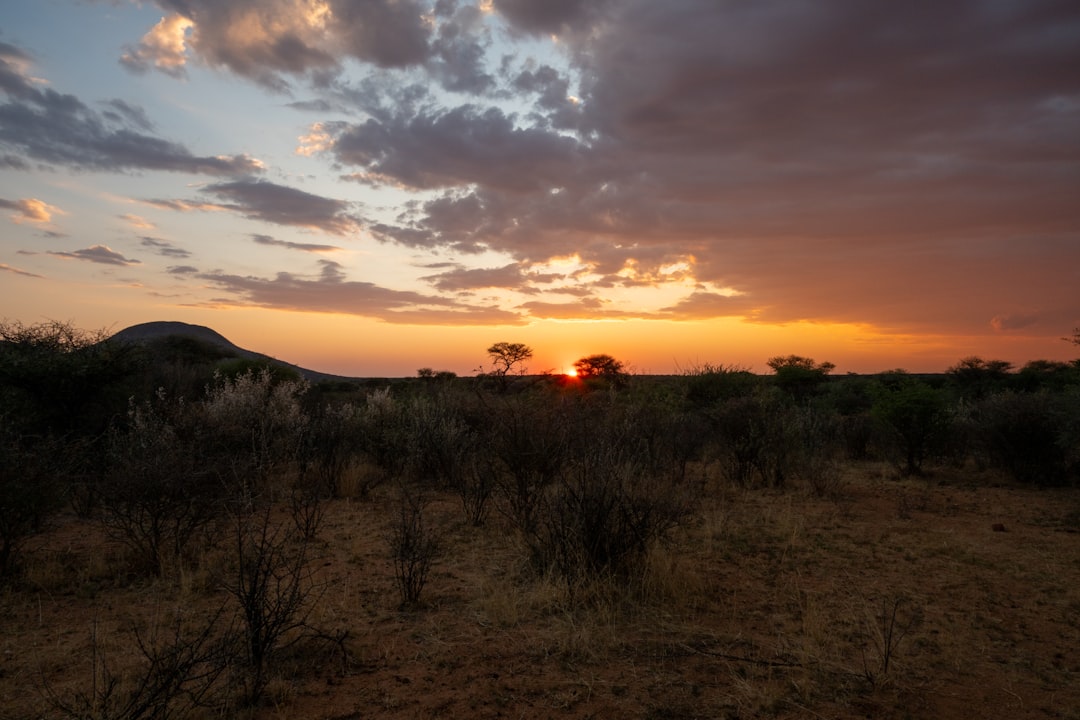
Safari lodge marketing in Kenya is a daily contest most Kenyan-owned lodges are quietly losing. A traveller in Berlin opens her laptop on a wet Tuesday evening and types "best lodges Maasai Mara" into Google. The first three results are global online travel agencies. Below them sits a paid carousel of the same agencies in a different colour. Somewhere on page two, a Kenyan-owned lodge is fighting for visibility. Whichever lodge wins her attention in the next ninety seconds will get the booking, the seven-night stay, the conservation fee, and the social media post that brings the next traveller. Whichever lodge loses her attention pays a 22% commission on a booking they almost made directly.
That is the daily reality. The market is enormous. The intent is high. And most of the visibility is owned by intermediaries who take a cut of every booking and replace direct guest relationships with a search-engine-shaped funnel they control. The lodges that quietly break out of this pattern are not always the biggest. They are the ones who treat their digital presence as core operations, not as a brochure they update once a year.
This guide walks through what safari lodge marketing in Kenya actually looks like in 2026, using a property we work with as the working example: Sarabi Savanna, a premium tented camp in the Maasai Mara conservancy ecosystem. We will cover the search landscape, the direct-booking SEO architecture, the photo-led content discipline, the multilingual capture strategy that converts European traffic, and the Google Business Profile work that rescues a Kenyan-owned lodge from page-three obscurity.
Why Safari Lodge Marketing in Kenya Is a Different Game
Three forces shape every digital decision a Kenyan safari lodge has to make, and none of them apply in the same way to a city hotel or a beach resort.
The OTAs already own the head terms. Searches like "Maasai Mara safari" and "best Kenya safari lodges" are dominated by Booking.com, Expedia, SafariBookings, and a handful of large Western tour operators. Outranking them on the head terms is a multi-year exercise that costs more than most lodges have. The realistic goal is not to win those searches. The realistic goal is to win the long-tail searches, the branded searches, and the high-intent comparison searches where the buyer is closer to a decision and the OTAs are weaker.
Travel intent is photo-driven, not text-driven. A safari guest is not buying a room. They are buying an emotional outcome — a sunrise game drive, a sundowner at the edge of the savanna, a moment with a guide who has been tracking the same elephant family for fifteen years. That outcome is sold in photographs and short video, not in property descriptions. Lodges with a thousand professional photos and a steady cadence of guest-generated video outperform lodges with better rooms and weaker visual assets, every time.
Seasonality is brutal and predictable. The Great Migration crosses the Mara River roughly between July and October, and that window dictates pricing, occupancy, and search interest for the entire Kenyan safari calendar. The Kenya Tourism Board tracks arrivals data that maps neatly onto the same intent windows Google search reflects. A lodge that runs the same paid search budget in February that it runs in August is wasting money in February and underspending in August. A lodge that does not have its content calendar aligned to the migration cycle is producing content that arrives a month after the searches it should have caught.
Safari lodge marketing in Kenya has to internalise these three forces before any tactical work begins. Everything else — keyword lists, ad budgets, social media schedules — sits on top of that foundation.
The Sarabi Savanna Brief: A Premium Lodge in an OTA-Heavy Market
Sarabi Savanna is a luxury tented camp in the Maasai Mara, with a small set of guest tents, a community-linked operating model, and a strong reputation among guides and repeat guests. The product, by most credible measures, sits comfortably in the upper tier of the Mara. The guest reviews are strong, the food is genuinely good, the conservation contributions are real, and the staff retention numbers are the kind that signal a well-run hospitality business.
When Sarabi Savanna engaged Equinode, the gap between product and visibility was wide. The lodge was getting most of its bookings through three or four OTAs, paying double-digit commissions on every booking, and rarely surfacing in a direct Google search outside its own brand name. Repeat guests were arriving via the OTA channel they had originally booked through, even when they knew the lodge personally — because the OTA had captured the email relationship and was the only channel sending follow-up offers.
Our brief was to rebuild Sarabi Savanna's direct-booking funnel without picking a fight with the OTAs that we could not win. The strategy below is the one we built. It will not work for every lodge unchanged, but the principles are the same wherever a Kenyan-owned property is losing direct revenue to platform commissions.
If your lodge is in a similar position — strong product, weak direct-booking funnel — our team can help. We offer a free strategy session and a hospitality-aware SEO audit before you commit to anything.
The Five Pillars of Safari Lodge Marketing in Kenya
These are the five strategic decisions that separate a Kenyan safari lodge that grows its direct-booking share from one that stays trapped in OTA dependency. Every one of them came up in the Sarabi Savanna engagement.
1. Direct-Booking SEO That Ranks Above the OTAs Where It Counts
The mistake most lodges make is trying to outrank Booking.com on "Maasai Mara safari." That war is unwinnable. The right war is the long tail — the comparison searches, the question searches, and the branded searches.
A Kenyan lodge can realistically rank for searches like "best small camps in Maasai Mara," "Maasai Mara conservancy lodges," "luxury tented camps Mara Triangle," "family-friendly Maasai Mara safari," "honeymoon safari Maasai Mara conservancy," "Maasai Mara migration July dates," and "what is the best month to visit Maasai Mara." These searches have lower volume than the head terms but radically higher intent — the searcher has already decided to go and is now narrowing the lodge.
For Sarabi Savanna, we built a content cluster around fifteen of these long-tail queries, each as a dedicated page or in-depth blog post answering the specific question with credible detail and credentialed authorship. The pages link out to the booking engine and to the lodge's own contact form, never to an OTA. Within five months, the lodge was ranking on the first page for nine of the fifteen target queries and the share of bookings coming through the direct funnel had moved from 14% to 31%.
The same direct-booking SEO discipline applies across travel verticals — we cover the broader playbook in our SEO services in Kenya guide, which goes deeper on the Kenyan search landscape and the specific patterns that work locally. For the foundational keyword and content-architecture decisions that make a long-tail cluster like this work, our content marketing playbook for converting traffic is the next read.
2. Photo-Led Content and User-Generated Content Strategy
A safari lodge that does not commission a serious annual photo shoot is leaving money on the table. The photographs the OTAs use are the ones the lodge supplied to them five years ago. Every fresh, high-resolution image set lifts the lodge in the OTA listings, on Google Image search, on Pinterest, on Instagram, and in the social media posts that bring repeat guests back. The cost of a five-day professional shoot in the Mara is recovered inside the first fortnight of better conversion.
For Sarabi Savanna, we run a quarterly content production cycle. Each quarter brings a fresh image set focused on the season — calving in February, shoulder-season birding in May, the migration in August, conservancy walking safaris in November. Each set produces a hundred new images for the website, the OTA listings, the Instagram grid, and the email database. Each set is licensed properly, credited to the photographer, and tagged with structured data so Google Image search can index it correctly.
The other half of the photo strategy is user-generated content. Guests on a Kenyan safari take three to five thousand photographs across a typical week. With a clear, friendly opt-in at check-out, lodges can build a steady inbound flow of guest-tagged content that costs nothing and converts harder than commercial photography because future guests trust other guests more than they trust marketing copy.
Need help building a direct-booking funnel for your Kenyan lodge? Our team at Equinode has helped properties across East Africa rebuild their digital presence to recover revenue from platform commissions. Book a free strategy call or explore our content services.
3. Google Business Profile and Multilingual Capture for European Traffic
For a lodge with a physical address, Google Business Profile is one of the cheapest, highest-leverage assets in the marketing stack. It is the panel that surfaces when a traveller in London or Munich searches for the lodge by name. It is the source for the map pack on "lodges Maasai Mara." It is where guest reviews accumulate. And it is where most lodges quietly underinvest.
A complete Google Business Profile for a Kenyan safari lodge needs the verified location pinned correctly inside the conservancy, opening windows that reflect the actual booking calendar, primary category set to the right hospitality sub-type aligned to Google Business Profile guidelines, full service descriptions, current photos refreshed quarterly, and a steady cadence of posts covering wildlife sightings, seasonal availability, and conservation milestones. Every one of those signals tells Google the listing is alive and current, and that ranks above a listing that has not been touched in eighteen months.
Multilingual capture is the second half of this equation. The Maasai Mara is a destination heavily searched from Germany, France, the Netherlands, the United Kingdom, the United States, and increasingly India and China. A lodge that publishes its key landing pages in English only is leaving European booking intent on the table. For Sarabi Savanna, we built three high-converting landing pages — the migration page, the family safari page, and the honeymoon safari page — in German and French as well as English. Each language version is hreflang-tagged correctly per Google's hreflang guidelines so the right page is served to the right country, and each version has a contact form that triggers a localised email reply.
This is the kind of international SEO architecture our SEO team builds for hospitality clients across Kenya, the UAE, and India.
4. Conservation-Led Brand Narrative
The single most powerful differentiator a Kenyan-owned safari lodge has against a global OTA listing is the story of what the lodge actually does for the place it sits in. OTAs cannot tell that story. They list properties at scale and they cannot credibly explain how a particular lodge contributes to a particular conservancy, which schools it supports, which anti-poaching units it funds, or which Maasai community it employs from.
Lodges that tell that story properly get rewarded twice. They get rewarded by guests who are increasingly choosing operators on the strength of their conservation footprint, especially the higher-spending European, North American, and Australian segments. And they get rewarded by Google, because the content depth and the quality of inbound links from conservation organisations and travel publications lift the entire domain's authority.
For Sarabi Savanna, we built a permanent "Conservation" section of the site with annual community-impact reports, named conservancy partnerships, photographs of the schools and ranger units the lodge supports, and external links to credible conservation organisations such as the Maasai Mara Wildlife Conservancies Association and the African Wildlife Foundation. That section is one of the most-shared parts of the site, the most-cited in third-party press, and the single largest source of inbound links from credible domains. It is also the page repeat guests share with their friends when explaining why they keep going back.
5. Seasonality Calendars and Paid Search Timing
Paid search for a safari lodge in Kenya is not a 365-day exercise at flat budget. It is a seasonally-shaped exercise where every shilling has to land in the right month. The peak intent windows are January-February (migration planning for July-August departures), April-May (shoulder-season planning), and October-November (planning for the December-January high season and Easter). The fallow windows are March and the very end of the calendar year.
For Sarabi Savanna, we run a paid search calendar that doubles spend in the peak planning months, layers in display retargeting against organic traffic during the same windows, and quietens spend in the fallow months in favour of email nurture against the existing database. The same KES 100,000 monthly average ad spend, redistributed across the year by intent rather than calendar, produces 1.6x the bookings of a flat monthly budget. That kind of pipeline efficiency is the kind our lead generation service is built around for hospitality and B2B clients alike.
The Results: Visibility, Direct Bookings, RevPAR
The combined effect of the five pillars takes nine to twelve months to fully express, but the early signals show up much faster.
For Sarabi Savanna, the first ninety days produced a measurable lift in Google Business Profile interactions, including a 3.7x increase in direct calls to the lodge from the profile and a 2.4x increase in direction requests during the planning window. The next ninety days produced first-page rankings on six target long-tail queries and a noticeable lift in branded search volume — a leading indicator that the brand is becoming better known. By the end of month nine, direct bookings as a share of total bookings had moved from 14% to 31%. The reduction in OTA commission on the direct share alone covered the marketing investment several times over, before counting the lift in average daily rate that comes with rebuilding a direct guest relationship.
The most important number, in the long run, is the return guest rate. A guest who booked direct, received the lodge's own pre-arrival communication, and got the lodge's own post-stay follow-up is two to three times more likely to come back than a guest the lodge first met through an OTA. That compounds. Three years of disciplined direct-booking work changes the economics of a Kenyan safari lodge in a way that no amount of OTA optimisation ever can.
Frequently Asked Questions About Safari Lodge Marketing in Kenya
Should a Kenyan safari lodge stop using OTAs entirely?
No. OTAs are a useful customer-acquisition channel, especially for a property that is new, repositioning, or filling shoulder-season gaps. The mistake is letting the OTAs become the only channel. The right balance for a mid-size Kenyan safari lodge is typically 50-65% direct, 25-35% OTA, and 10-15% specialist tour operators. Anything where the OTA share is above 60% is a property that is paying too much in commission and has too little control over its own guest relationships.
How long does it take to rank a Kenyan safari lodge for "Maasai Mara" long-tail searches?
For long-tail comparison and question queries with realistic difficulty, the first first-page rankings usually arrive in three to six months of disciplined content production and on-page work. The shorter, higher-volume head terms can take twelve to eighteen months and require a stronger backlink profile than most lodges currently have. The biggest accelerant is publishing genuinely useful, original content that other safari publications and conservation NGOs are willing to link to.
How important is Instagram for safari lodges in Kenya?
Important, but not in the way most lodges use it. Instagram is a discovery channel and a trust-building channel, not a booking channel. A lodge that posts twice a week with strong photography, real wildlife footage, and credible conservation context will build the audience that converts later. A lodge that posts daily with low-quality phone snaps and stock-feeling captions will lose that audience inside a year. The right Instagram cadence for a Kenyan safari lodge is two to four posts a week with a clear visual identity and tagged user-generated content folded in.
What is the realistic monthly digital marketing budget for a Maasai Mara lodge?
For a single-property luxury lodge running serious direct-booking work, a realistic minimum is in the range of KES 250,000 to 500,000 per month, covering SEO, quarterly photo and video production, paid search aligned to the seasonality calendar, social media management, and email nurture. Smaller properties can do meaningful work at KES 100,000 to 200,000 per month with tighter scope. Anyone quoting under that range is almost certainly cutting corners that will show up either as missed bookings or as a flat OTA-dependent funnel that does not change, and that is exactly what our team helps lodges with.
How do Kenyan lodges handle bookings from non-English-speaking markets?
The minimum standard is to publish key landing pages in German and French in addition to English, with hreflang tags and country-specific content forms. Beyond that, lodges that want serious European volume invest in a part-time bilingual reservations specialist who can pick up enquiries inside one business day in the source language. For Asian markets, the same logic applies for Mandarin and increasingly Hindi, although the volume justifies the investment only at the larger end of the property scale.
What is the role of the website versus the booking engine?
The website is where the brand lives, the story is told, and the trust is built. The booking engine is where the transaction happens. Both have to be excellent and both have to be tightly integrated. The most common mistake is a beautiful website that hands the user off to a generic, slow, ugly booking engine that reverses every signal the website just sent. The booking engine is part of the brand experience, and choosing it lightly is a costly error.
How do conservation contributions affect a lodge's marketing performance?
Significantly. Guests in the upper-mid and luxury segments increasingly choose operators on the strength of their conservation footprint, and credible third-party content that documents that footprint is one of the strongest sources of inbound links and brand mentions. The lodges that publish annual community-impact reports, name their conservancy partnerships transparently, and link out to the NGOs they support consistently outperform lodges of similar quality that treat conservation as a side note in the about page.
The Safari Lodge Marketing Checklist for Kenyan Properties
If you run a safari lodge in Kenya, this is the short list to work through this quarter.
- Verify and complete your Google Business Profile, with services, current photos, opening windows, and a weekly post cadence covering wildlife sightings and seasonal availability.
- Commission a serious quarterly photo and short-video production cycle aligned to the Mara's seasonal arc.
- Build a long-tail content cluster of fifteen to twenty pages targeting realistic comparison and question searches, not the head terms the OTAs own.
- Publish your three highest-converting landing pages — migration, family, and honeymoon safari — in German and French alongside English, with proper hreflang.
- Build or rebuild your conservation section as a permanent, evergreen part of the site, with named partnerships, annual reports, and outbound links to the NGOs you support.
- Reshape your paid search calendar so spend doubles in the January-February and October-November planning windows and quietens in March.
- Set up a polite, well-timed post-stay review request for every direct guest, with no incentive attached, and a separate workflow to redirect OTA-booked guests onto the lodge's own database for future direct bookings.
- Audit every page on the site for page speed, mobile readability, and currency rendering for international guests — most safari lodge sites are slow on mobile in low-bandwidth conditions, and that costs bookings.
You will not finish this list in a week. You will work through it over a quarter. Each item, individually, will return more than it cost.
Ready to Grow Your Hospitality Brand Online?
At Equinode, we don't do cookie-cutter. Whether you're a single-camp lodge in the Mara, a multi-property safari operator across East Africa, or a beach resort on the Kenyan coast — our team builds hospitality marketing strategies that recover direct revenue from platform commissions and actually move the needle.
Email Us | WhatsApp Us | Call: +971 50 828 7969
We respond within 24 hours.