Most businesses know they should be tracking their marketing ROI. Very few actually do it well.
A 2024

[HubSpot State of Marketing report](https://www.hubspot.com/state-of-marketing)

found that 40% of marketers say proving the ROI of their campaigns is their biggest challenge.

Yet ROI is the single metric that determines whether to scale a campaign or cut it.


The good news: measuring **digital marketing ROI** is not complicated once you have the right framework.

You do not need a data science team. You need the right metrics, the right tools, and a clear process.


At Equinode, we have worked with business owners across India, Kenya, and the UAE who were spending

thousands on digital marketing with no visibility into what was actually working.

This guide draws directly on Equinode’s hands-on experience helping clients track, measure,

and improve their marketing ROI across three markets.
In This Guide:
- What Is Digital Marketing ROI and Why Does It Matter?
- The Key Metrics That Drive Marketing ROI
- Real Results: How Equinode Helped a Dubai B2B Brand Double Their ROI
- A Simple Framework for Calculating Your Marketing ROI
- Common Mistakes That Distort Your ROI Numbers
- Frequently Asked Questions
What Is Digital Marketing ROI and Why Does It Matter?
Digital marketing ROI measures the return you get from every rupee, shilling, or dirham you spend on your campaigns.

The basic formula is:


**ROI (%) = [(Revenue from Campaign − Cost of Campaign) ÷ Cost of Campaign] × 100**


If you spent AED 10,000 on a Google Ads campaign and it generated AED 40,000 in sales, your ROI is 300%.

That formula is the starting point. The real challenge is attributing revenue to the right campaigns.


A customer might discover your brand on Instagram, click a Google ad a week later, and convert after

reading a blog post. Which channel gets credit? This is the **attribution problem**, and it is why

most businesses either overvalue or undervalue specific channels.
Why ROI measurement matters right now:
-
Marketing budgets are under pressure. Every channel needs to justify its spend.
-
AI-driven ad platforms like Google Performance Max and Meta Advantage+ optimise automatically. But they optimise toward the wrong goal if your conversion tracking is broken. -
According to

[Think with Google](https://www.thinkwithgoogle.com),

businesses with robust measurement frameworks spend 25 to 30% more efficiently than those without.
Understanding your ROI is not a nice-to-have. It is the difference between growing a marketing
budget confidently and making expensive guesses every month.
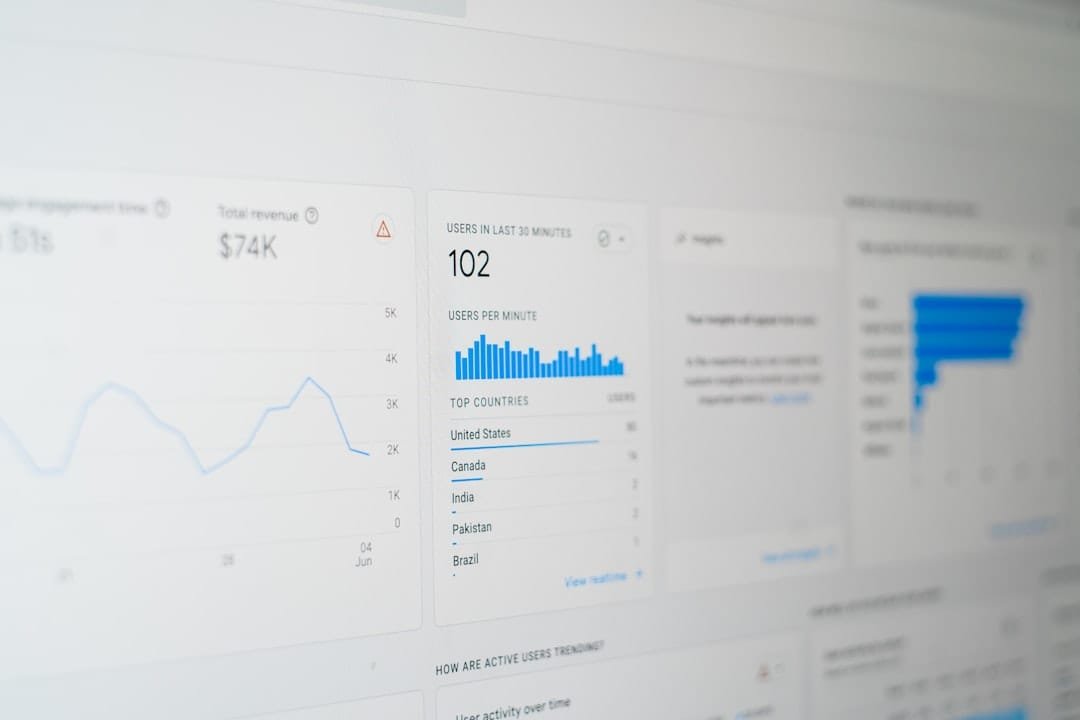
Tracking the right marketing metrics is the foundation of any ROI framework.

Photo by [Vitaly Gariev](https://unsplash.com/@silverkblack) on Unsplash.
The Key Metrics That Drive Marketing ROI
Not all metrics are equal. Vanity metrics like impressions and follower counts feel good but rarely

link directly to revenue. Equinode’s approach to ROI measurement focuses on these six core indicators:
1. Cost Per Lead (CPL)
How much you spend to generate one qualified lead. If your Google Ads campaign costs INR 50,000

and produces 100 leads, your CPL is INR 500. Track this separately for each channel so you

can compare apples to apples.
2. Customer Acquisition Cost (CAC)
The full cost of acquiring a paying customer. This includes ad spend, agency fees, creative costs,

and sales team time. A high CAC relative to your customer lifetime value is a serious red flag.
3. Conversion Rate
The percentage of visitors who take a desired action: fill a form, make a purchase, or call your business.

A 1% improvement in conversion rate often has a bigger ROI impact than a 20% increase in ad spend.
4. Return on Ad Spend (ROAS)
Specific to paid campaigns. **ROAS = Revenue from Ads / Ad Spend.**

A ROAS of 4x means every AED 1 you spend returns AED 4 in revenue.

Most businesses need a minimum ROAS of 3x to run a profitable paid campaign.
5. Attribution Model
How you assign credit to each marketing touchpoint before conversion.

Last-click attribution gives all credit to the final click.

Data-driven attribution spreads credit across the full customer journey.

The model you choose changes your ROI numbers significantly, so choose deliberately.
6. Revenue Per Session
Useful for e-commerce. Divide total revenue by total website sessions.

This gives a single comparable number across all traffic sources and campaigns.


  **Working on ROI measurement for your business?**

  Equinode’s team has hands-on experience helping businesses in India, Kenya, and the UAE

  build tracking frameworks that connect marketing spend to real revenue.

  [See how Equinode approaches digital marketing analytics →](https://equinode.net/contact)
Real Results: How Equinode Helped a Dubai B2B Brand Double Their ROI
One of Equinode’s clients, a mid-sized B2B logistics company based in Dubai, came to us with

a problem many business owners recognise immediately. They were spending AED 20,000 per month

across Google Ads, LinkedIn, and email marketing. But they had no way to tell which channel

was actually driving their inquiries.


Their sales team was logging leads in a spreadsheet. Their marketing team was reporting clicks

and impressions. Neither team had agreed on what counted as a “qualified lead.” The result was

predictable: marketing thought campaigns were performing well. Sales thought the lead quality was poor.

Both were working from incomplete data.


Equinode started by aligning both teams on a single definition of a qualified lead.

We then connected their CRM to Google Analytics 4 using UTM tracking parameters and set up

conversion tracking across all three channels. Within 60 days, the data told a clear story.
-
LinkedIn was generating 68% of their qualified leads at a CPL 40% lower than Google Ads.
-
Email marketing had a 6x higher conversion rate than any paid channel.
-
Google Ads was capturing branded searches, not new audiences.
After Equinode restructured the budget to reflect actual performance, the client cut Google Ads
spend by 35% and reinvested it into LinkedIn prospecting and email nurture sequences.
Within four months, qualified leads increased by 52% and marketing ROI improved from a
negative return to 4.2x, without increasing total budget.
The lesson is consistent across markets. ROI problems are rarely about how much you spend.
They are almost always about visibility.
For more context on how measurement fits into a broader growth strategy, see
A Simple Framework for Calculating Your Digital Marketing ROI
Here is the step-by-step process Equinode recommends for any business building ROI tracking from scratch.
- Define your conversion events.
  A “conversion” means different things to different businesses. For e-commerce, it is a purchase.

  For a B2B service company, it might be a demo booked or a contact form submitted.

  Define yours clearly before you track anything.
- Set up proper tracking.
  Install Google Analytics 4 on your website. Set up conversion events. Add UTM parameters

  to every link in every ad, email, and social post.

  Without UTMs, you will never know which campaign drove which visitor.
- Pull in revenue data.
  Connect your CRM or e-commerce platform to your analytics. Google Analytics 4 integrates

  directly with Shopify, WooCommerce, and most major CRMs.

  This lets you tie revenue back to specific campaigns and channels.
- Calculate ROI per channel.
  Run this calculation for each channel every month:

  *Total revenue attributed to channel / Total cost of that channel.*

  Compare across channels. Some results will surprise you.
- Review and reallocate quarterly.
  ROI data is only useful if you act on it. Every quarter, shift budget away from

  underperforming channels toward those delivering the strongest return.

  This compounding effect means the same budget performs better every cycle.


  Quarterly budget reviews driven by ROI data are a core part of Equinode’s client process.

  Photo by [Vitaly Gariev](https://unsplash.com/@silverkblack) on Unsplash.
Common Mistakes That Distort Your ROI Numbers
Even with the right tools in place, these mistakes create a false picture of your marketing performance.
Ignoring organic channels
Most businesses only calculate ROI for paid campaigns. But your blog content, SEO, and social

media all have real costs: time, content creation, and agency fees. Include them in your ROI

calculations for an accurate view of total marketing performance.

If you are unsure whether your organic presence is pulling its weight,

[see how Equinode diagnoses website ranking problems](https://equinode.net/blog/why-website-not-ranking-on-google/)

as a starting point.
Using last-click attribution by default
Last-click attribution is the default setting in most platforms. But it overvalues Google Ads

(where conversions often happen) and undervalues content, social, and email (where awareness

is built). Switch to data-driven attribution in Google Analytics 4 for a more accurate picture

of which channels are genuinely moving customers forward.
Not accounting for customer lifetime value
A customer who converts at a high CPL can still be profitable if they spend with you for years.

Always calculate CLV alongside CAC. A CPL of INR 2,000 looks expensive until you realise

that customer is worth INR 50,000 over two years.
Mixing brand and non-brand keywords in ROAS
If your Google Ads campaigns include brand name keywords, your ROAS will look inflated.

People searching your brand name would likely find you anyway.

Separate brand and non-brand campaigns to see your actual paid ROI on new audiences.
Not tracking across devices
A customer who sees a LinkedIn ad on mobile and converts on desktop appears as a direct visit

in your analytics. Google Analytics 4 cross-device tracking via Google Signals captures most

of these journeys when users are logged into a Google account.

This matters especially in UAE and India markets, where mobile-first usage is dominant.


For a deeper look at how paid vs organic performance compares for businesses in the UAE,

[read Equinode’s comparison of SEO vs Google Ads for UAE businesses](https://equinode.net/blog/seo-vs-google-ads-uae/).
Frequently Asked Questions
What is a good digital marketing ROI?
A general benchmark is a 5:1 ratio: you get back five times what you spend.

Equinode typically targets a minimum 3x ROAS for paid campaigns before recommending scale.

“Good” also depends on your industry margins and growth stage.

High-margin software businesses can thrive at 2x. Low-margin retail needs 6x or more.
How long does it take to see digital marketing ROI?
Paid campaigns like Google Ads and Meta Ads can show results within two to four weeks,

though meaningful optimisation takes 60 to 90 days. SEO and content marketing take

three to six months to build momentum. Email marketing often produces ROI within the

first campaign cycle, making it one of the fastest channels to validate.
Which digital marketing channel has the highest ROI?
Email marketing consistently delivers the highest ROI across industries, averaging 36:1

according to Litmus research. SEO delivers strong long-term ROI because organic traffic

compounds over time. The right channel for your business depends on your audience,

sales cycle, and whether you need speed or scale.
Can I track digital marketing ROI without a big budget?
Yes. Google Analytics 4 is free. UTM tracking costs nothing to implement.

Even a basic spreadsheet can connect ad spend to leads if you log data consistently.

The real investment is process discipline, not software. Start with one channel,

track it properly, and build from there.
What is the difference between ROI and ROAS?
ROAS (Return on Ad Spend) measures revenue relative to ad spend only.

ROI includes all costs: agency fees, creative production, tools, and staff time.

ROAS is useful for comparing campaigns against each other.

ROI tells you whether your marketing operation is actually profitable as a whole.
How does Equinode track ROI for clients?
Equinode builds a custom reporting framework for each client that connects ad platforms,

Google Analytics 4, and CRM data into a single monthly view. We report on CPL, ROAS,

CAC, and channel-level revenue attribution. Every recommendation we make is tied to

a specific, measurable ROI outcome, so clients know exactly why budget is being moved.
Start Measuring What Actually Matters
Measuring digital marketing ROI is not a one-time exercise. It is a system.

Build it once, review it regularly, and it becomes your clearest guide for

where to put every marketing rupee, shilling, or dirham.


The businesses that grow fastest are not always those with the biggest budgets.

They are the ones who know exactly which campaigns are working and double down on those.

The ones who are guessing keep pouring money into channels that are not performing.


If your marketing feels like a black box right now, that is worth solving before

you spend another cent. Equinode can help you build the tracking framework,

understand your numbers, and turn that clarity into measurable growth.
Ready to Grow Your Business Online?
  At Equinode, we don’t do cookie-cutter. Whether you’re scaling in India,

  breaking into East Africa, or building a presence in the UAE — our team

  builds strategies that actually move the needle.
Let’s talk about your goals.
[Chat on WhatsApp →](https://wa.me/971508287969)

[Email Us](mailto:Info@equinode.net)

  Or call us at [+971 50 828 7969](tel:+971508287969) — we respond within 24 hours.


  **Written by the Equinode Team**

    Equinode is a performance-focused digital marketing agency helping

    businesses grow across India, Kenya, and the UAE. We specialise in SEO,

    Google Ads, social media, and web development.

    [Learn more about us →](https://equinode.net/about)